What warm and cool colors mean
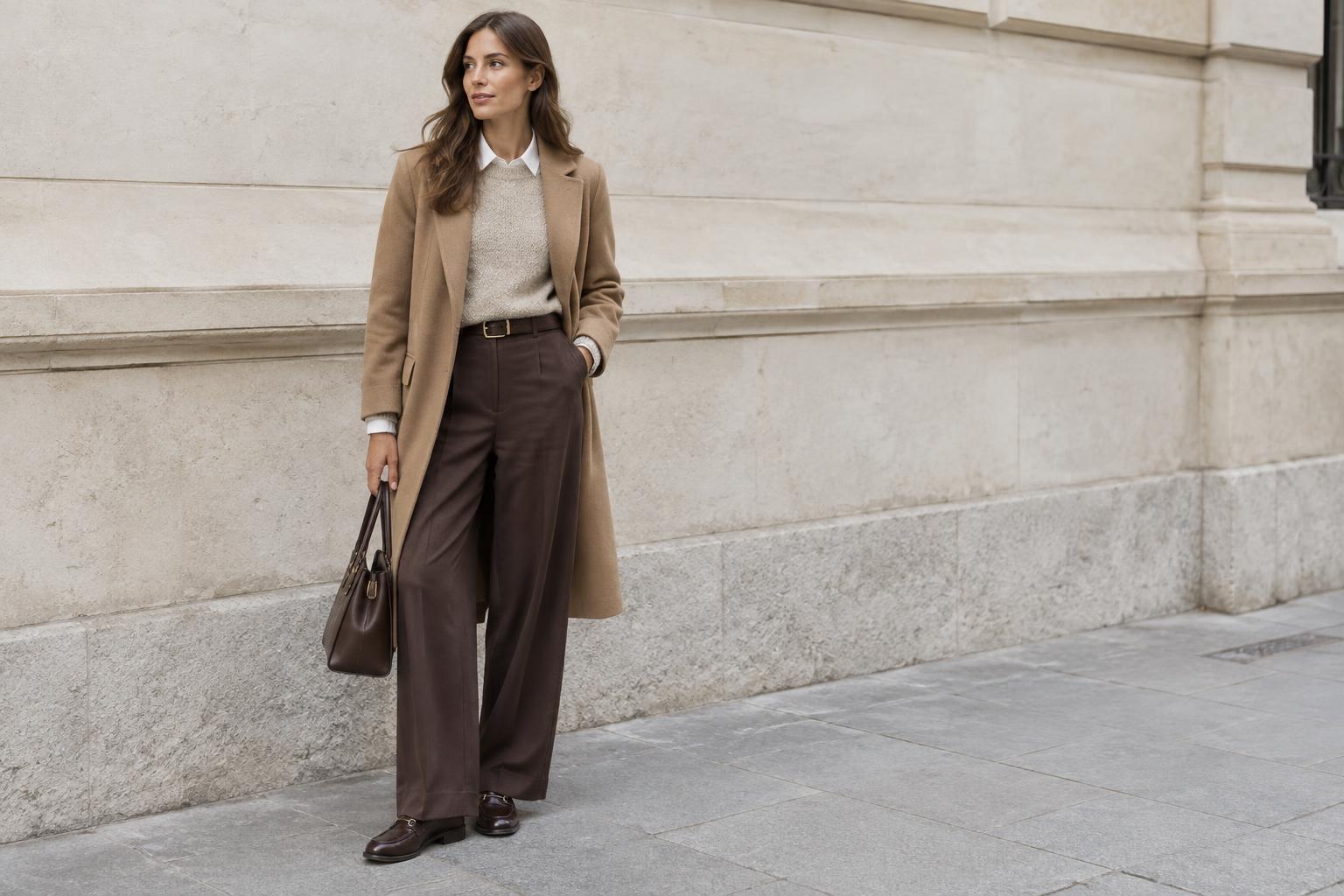
Warm colors tend to suggest sunlight and earth: think rust, camel, mustard, coral and tomato red. Cool colors often bring to mind water or shade, such as cobalt, lavender, icy pink and blue-based red. The distinction is less rigid than a color wheel might suggest. Green, for example, can look warm when it leans toward olive or cool when it leans toward mint. Even two pieces labeled “beige” may have different undertones.
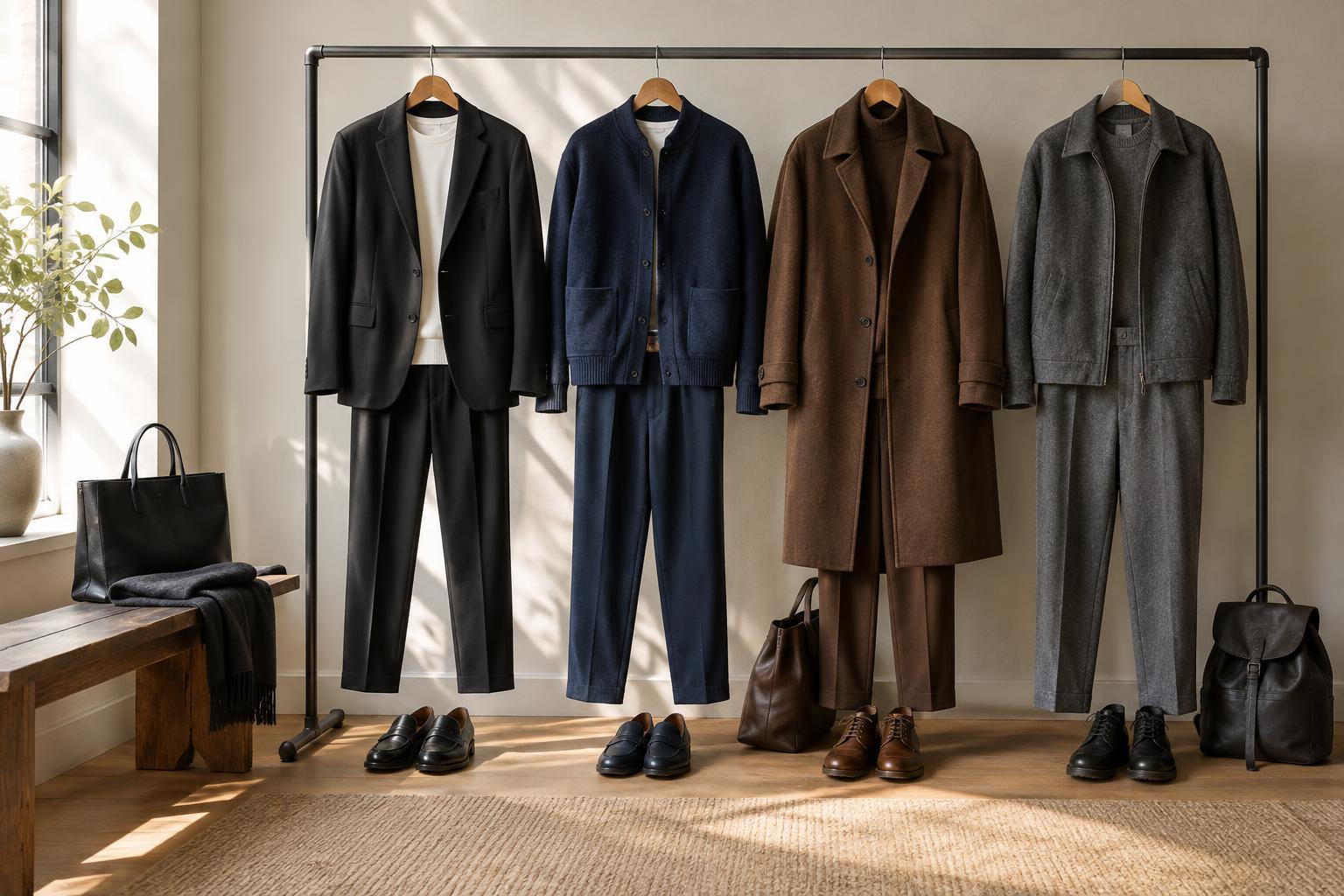
Neutrals have temperature, too. Cream and chocolate brown usually read warmer than stark white and charcoal. Navy often reads cool, while some faded denims look fairly neutral. If you are unsure about a garment, place it beside a clear reference color: a golden tan scarf for warmth or a blue-gray shirt for coolness. The comparison can be easier to see than the color on its own.
Start with a simple color direction
An outfit is often easier to assemble when most of its pieces share a temperature. For a warm casual look, try an ivory T-shirt, olive trousers and a camel overshirt. Brown leather shoes or a rust-colored bag can continue the same direction without making every item match. For a cooler version, pair a crisp white shirt with dark-wash jeans, a slate jacket and black shoes. The colors relate to one another, but differences in depth keep the outfit from looking flat.
You can also build around a piece you wear often. If your favorite coat is warm tan, try it over cream, chocolate, muted orange or olive. If it is cool gray, test it with white, navy, berry or soft blue. These are starting points rather than a required palette. Seeing combinations on your own clothes, in the light where you usually wear them, is more useful than memorizing a list of approved colors.
Mix warm and cool colors deliberately
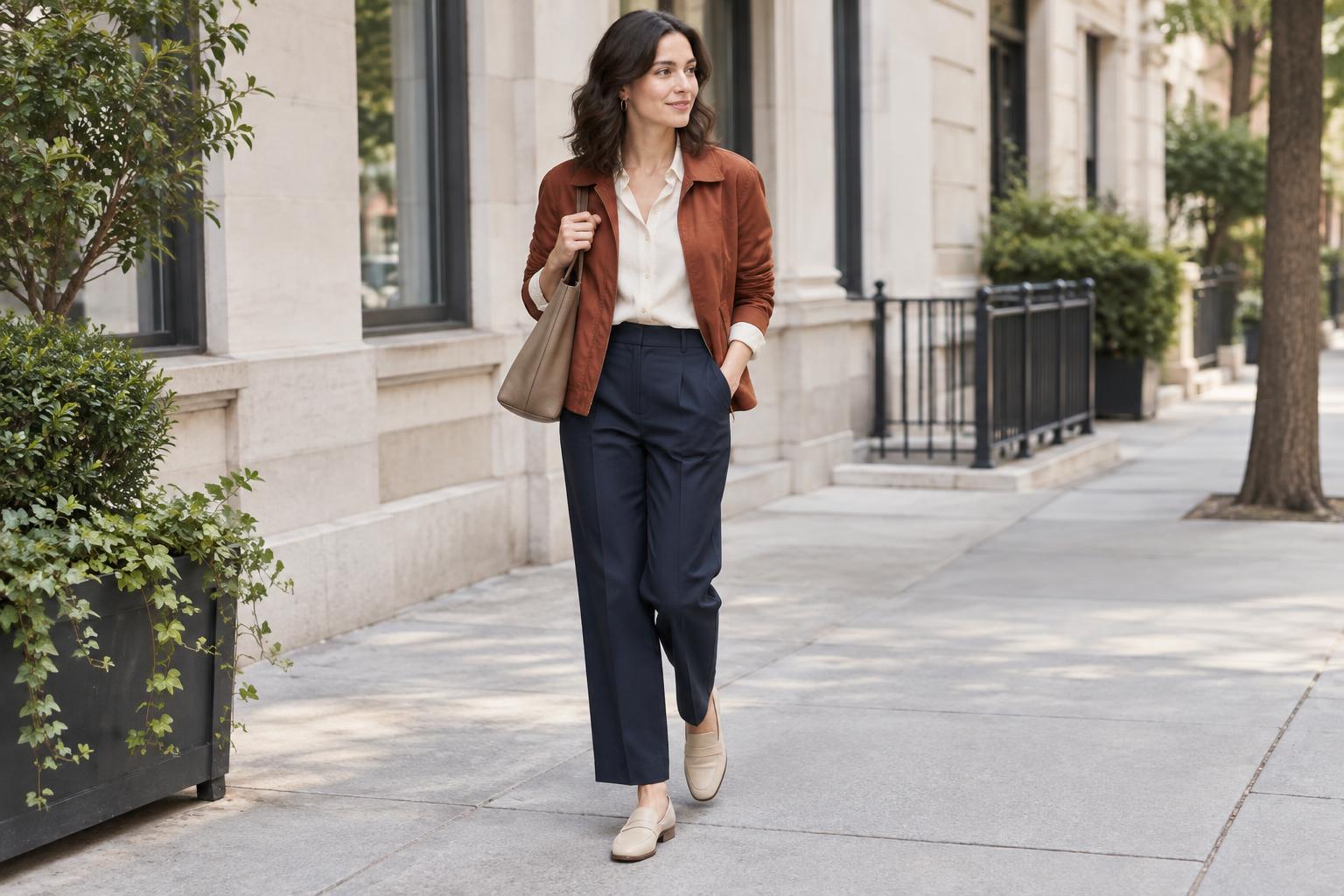
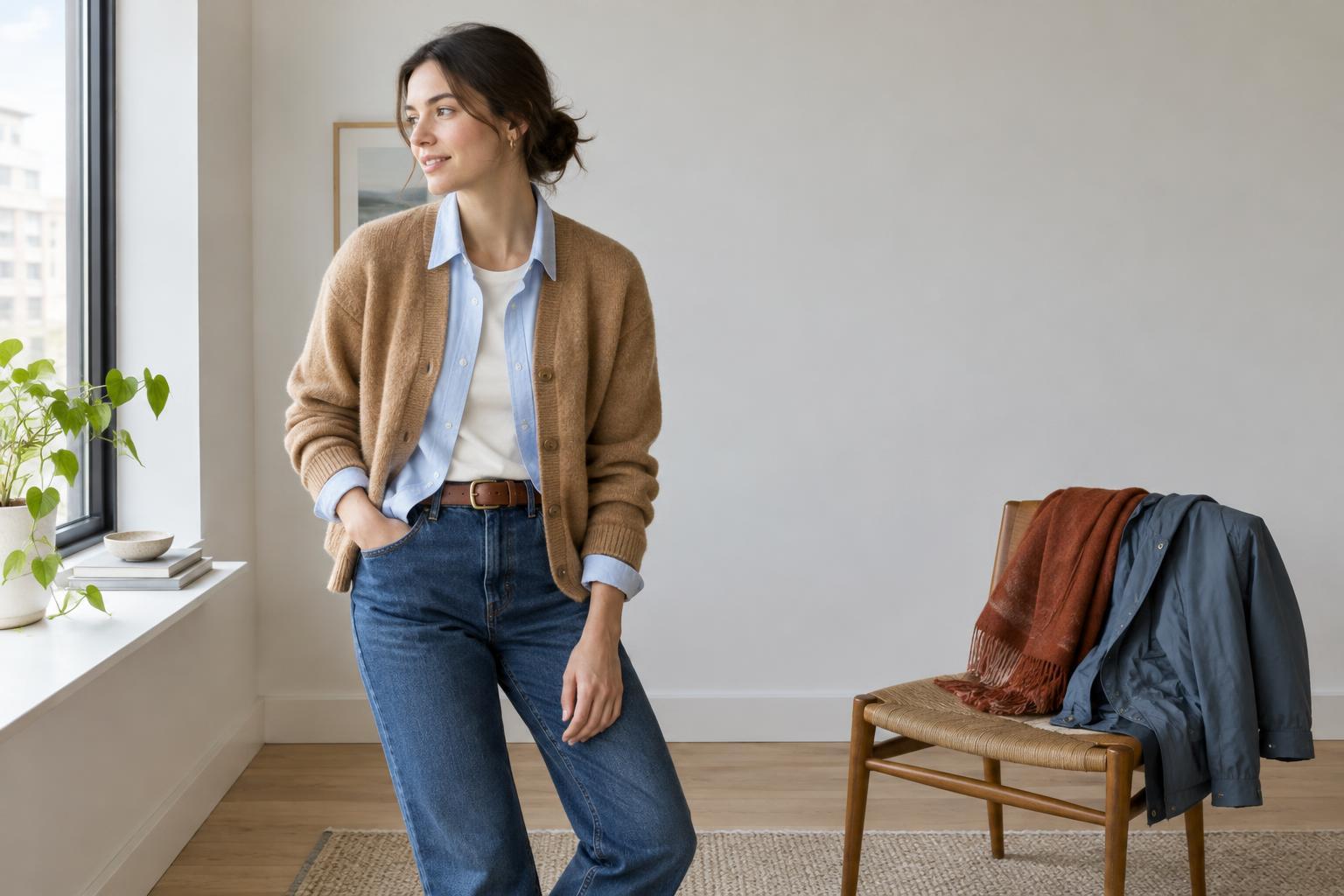
Warm and cool colors do not need to stay in separate wardrobes. A cool navy sweater can look lively with warm cognac shoes. A rust knit can soften blue jeans, while a camel coat can add warmth to a black-and-white outfit. To make a mixed combination feel considered, let one temperature lead and use the other in a smaller piece, such as a belt, scarf or bag.
Repeating a color can help bridge the mix. Suppose you wear a cool blue shirt with warm beige trousers. A patterned scarf containing both blue and beige gives the eye a link between them. Another option is to keep one element quiet: choose a muted olive jacket rather than a bright lime one beside a vivid cobalt top. When colors compete, adjusting their intensity may matter more than changing their temperature.
Use placement and texture to refine the effect
The color nearest your face may have a different effect from the same color worn as shoes or trousers. If a shade feels difficult as a top, try it farther from your face before ruling it out. A mustard bag, for instance, can add warmth to a cool outfit without changing how you feel in your usual white shirt. Personal preference is a good guide here: notice which colors make you feel comfortable and which you enjoy wearing repeatedly.
Fabric changes how color appears. A glossy satin blouse may make a shade seem sharper, while brushed cotton or wool can make a similar shade look softer. Texture also gives a limited palette more interest: a cream knit, tan cotton trousers and brown leather belt offer variation without relying on strong contrast. If a combination looks unexpectedly harsh, consider swapping one shiny or saturated item for a matte or muted version.
Try a small outfit experiment
Choose one dependable outfit, such as jeans, a T-shirt and a jacket. Make a warm version with an ivory tee, olive jacket and brown accessories. Then make a cool version with a white tee, navy jacket and black accessories. Finally, keep the cool base and add one warm item, perhaps a tan belt. This three-outfit comparison makes it easier to see what temperature changes—and what stays the same.
You do not need to assign every garment a permanent label. Light, fabric, fading and neighboring colors can all affect how a piece reads. Treat warm and cool as useful ways to notice relationships between clothes, not limits on your personal style. The best combinations are the ones you can assemble easily and want to wear again.