Start with the care label and the load
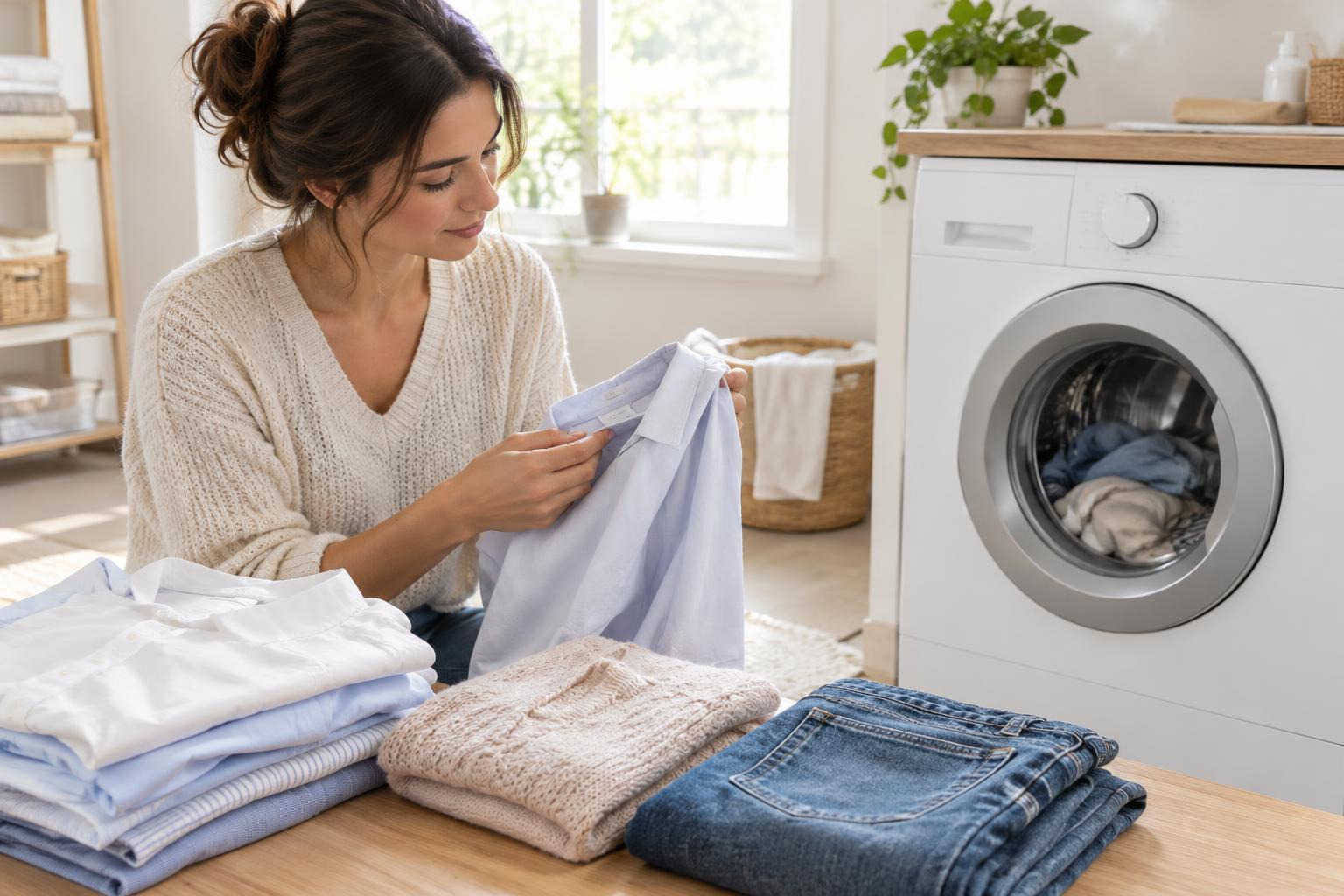
The most useful machine setting is the one your clothes can tolerate. Check the care label before sorting: the number in a wash-tub symbol is the maximum wash temperature, not a target you must reach. A line beneath the tub calls for a gentler process. If the label says hand wash or do not wash, do not assume a delicate machine cycle is an equivalent substitute.
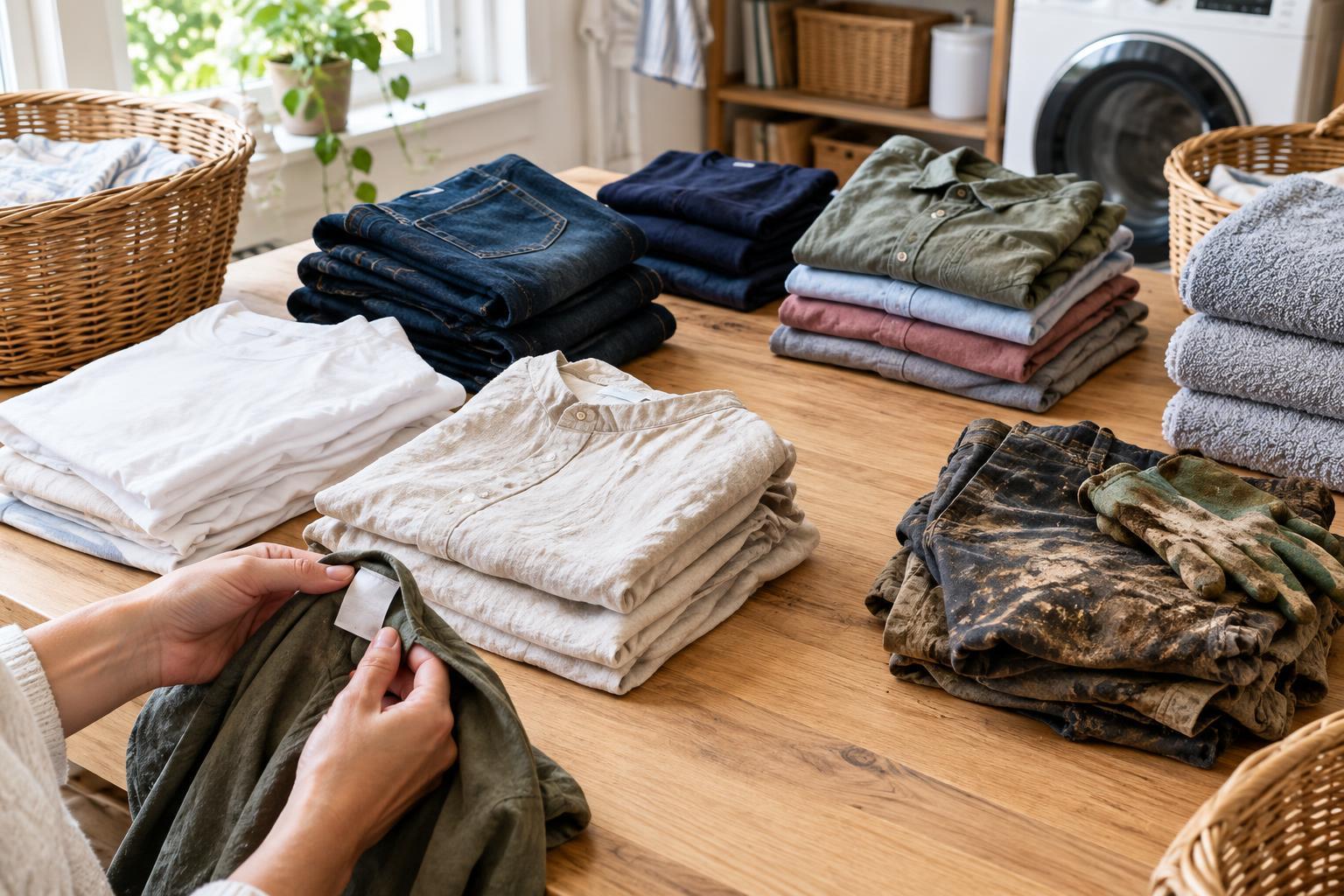
Next, sort by more than color. A load of sturdy cotton T-shirts can handle different movement from a load of fine knits, even if everything is dark. Keep items with rough fastenings away from fabrics they might snag, close zips, and turn embellished or printed pieces inside out when their labels permit machine washing. Leave enough room for clothes to move; an overfilled drum makes rinsing and cleaning less effective.
Choose temperature for the garment, not just the stain
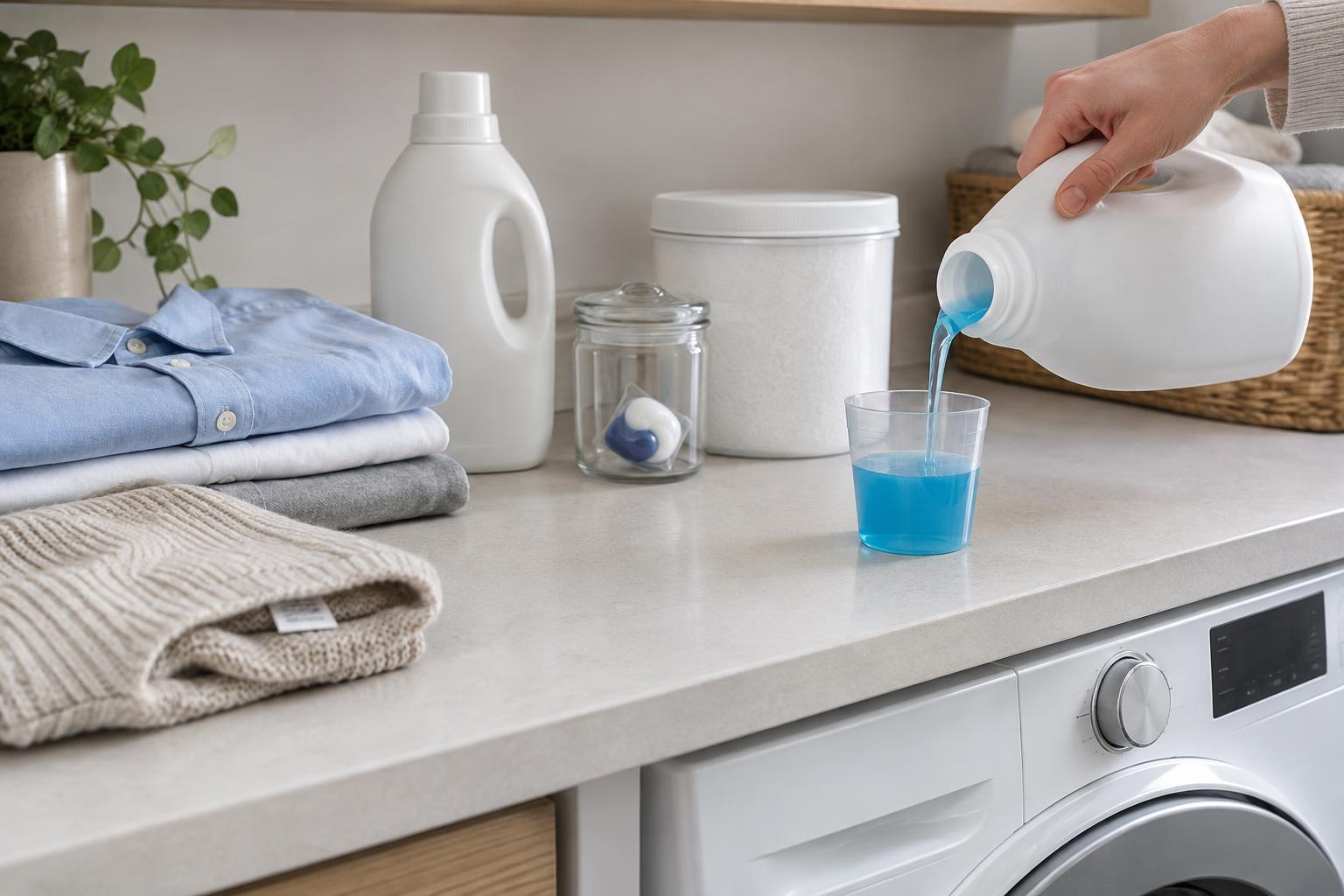
Cool water is a sensible starting point for many lightly worn, everyday clothes, especially dark colors and pieces that may shrink or fade. A 30°C setting is often a practical choice when the label allows it. Use detergent intended to work at the selected temperature, and check its dosing directions rather than adding extra in the hope of getting a cleaner load.
Warmer water may help with some oily soil on sturdy, colorfast fabrics. Choose 40°C only when the labels allow it and the items in the load need it. Reserve hotter settings for washable items whose labels permit them and whose cleaning needs justify them, such as some towels or bed linens. Heat can set certain stains, so treat a stain according to the garment and stain type before washing rather than automatically turning up the temperature.
When labels in one load disagree, follow the most restrictive one or split the load. This is particularly helpful when a pale shirt, dark denim and a delicate top all seem ready for the laundry basket but need different care.
Match the cycle to how much movement clothes can take
A normal or cotton cycle generally uses more vigorous movement and is suited to sturdy, washable items. A synthetics or easy-care cycle is often a better fit for everyday blends and garments that crease easily. Delicate and wool cycles typically reduce agitation, but names and behavior vary by machine. Check your washer’s guide if a cycle name is unclear.
Choose the gentlest cycle that will still clean the load. For example, a lightly worn viscose blouse may benefit from a delicate cycle if its label permits machine washing; a pile of sturdy cotton socks may need a more thorough cycle. A quick wash is convenient for a small, lightly soiled load, but it is not a catch-all setting for muddy clothes, heavy towels or a full drum.
A mesh bag can help protect small or snag-prone items, though it cannot make an unsuitable cycle safe. If a garment needs special handling, its label takes priority over a general rule about fabric type.
Set spin speed with drying and creasing in mind
Spin speed controls how quickly the drum turns to extract water near the end of a wash. A faster spin usually leaves sturdy items less wet, which can shorten their drying time. It can also leave some fabrics more creased or put extra strain on delicate pieces. A lower spin is often useful for fine knits, lightweight blouses and garments that distort easily.
If your machine displays revolutions per minute, treat the number as an adjustable tool, not a quality rating. You might use a higher available speed for durable cotton towels, a moderate one for everyday mixed fabrics, and a lower one for delicates, always within the care-label guidance. Very low spin can leave clothes heavy with water, so support wet knits when lifting them out and reshape them before drying.
Use a simple decision order each time
For an ordinary load, make three decisions in order. First, read the labels and separate anything that needs a different wash method. Second, choose a temperature based on the most sensitive item and the amount of soil. Third, select a cycle and spin speed that match the fabric’s durability. This sequence is easier to repeat than choosing a favorite preset and hoping it suits everything.
After the wash, check the results before changing every setting at once. If clothes feel soapy, review load size and detergent dose. If they are not clean, consider whether the drum was crowded, the cycle was too short, or stains needed pretreatment. If they come out creased or misshapen, try gentler movement or a lower spin next time. Small adjustments, guided by the labels, will help you find a reliable routine for the clothes you actually wear.