What elastane adds to a fabric
Elastane is an elastic fiber often blended with cotton, denim, wool or synthetic fibers. Its job is to let a fabric stretch and then pull back toward its original shape. On a clothing label, you might see a small percentage of elastane alongside a much larger percentage of another fiber. That larger share still matters: cotton with elastane will not feel identical to polyester with elastane.
Stretch and recovery are related but different. Stretch describes how far a material gives when you move or pull it; recovery describes how well it returns afterward. A waistband that expands comfortably but stays loose by the end of the day has stretch without the recovery you may want. When trying on a garment, sit, bend and walk in it, then check whether the knees, elbows or seat settle back into place.
Why the label does not tell the whole story
The amount of elastane is only one clue to how a garment will behave. Knit fabrics can stretch because of the way their loops are constructed, even without elastic fiber. Woven fabrics can also be made with a little give, depending on their construction and finish. Fabric weight and garment cut change the experience further: a close-fitting pair of trousers asks more of its stretch than a loose pair made from the same cloth.
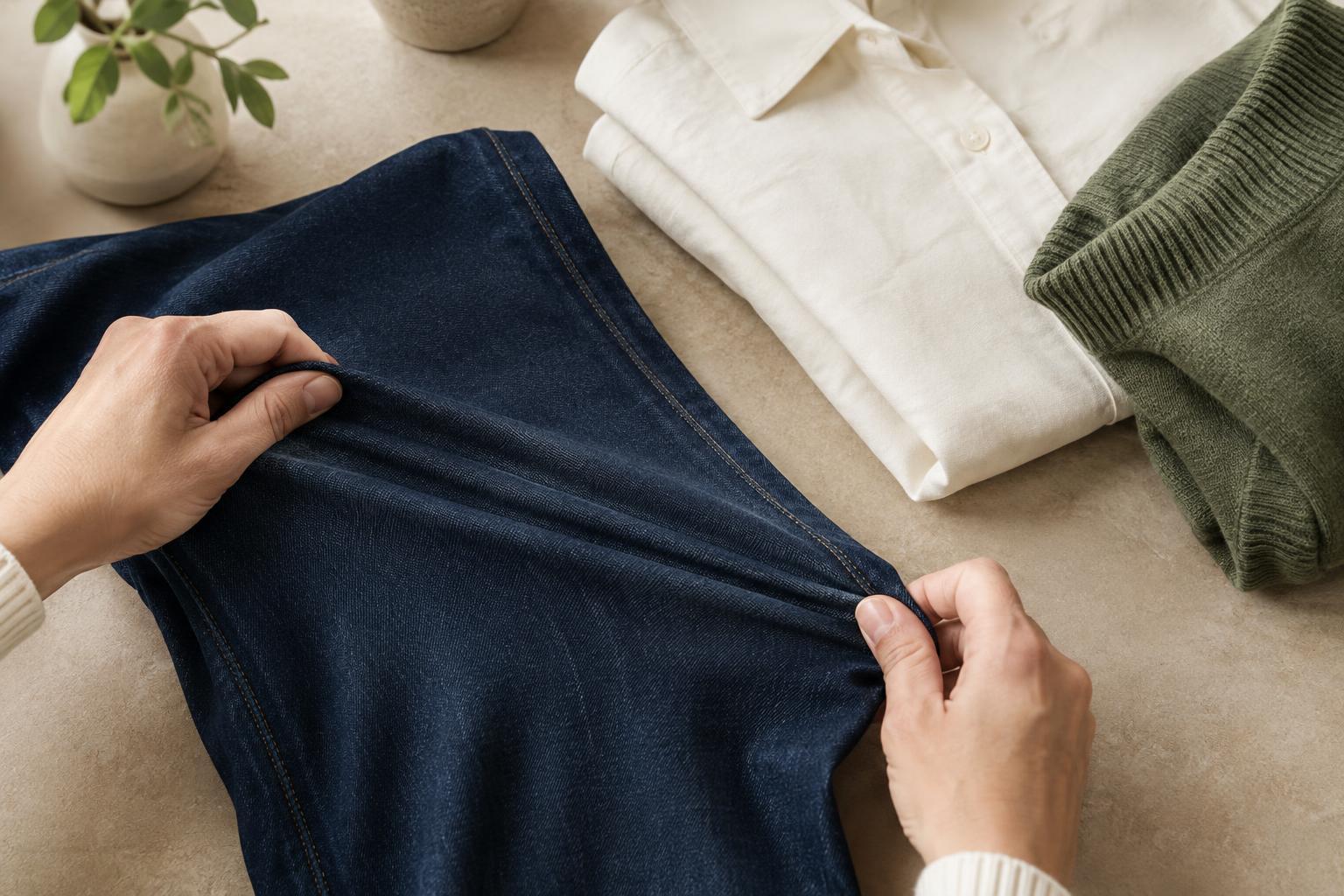
To get a practical sense of a fabric, gently pull it across its width and length, then release it. Some garments give mainly from side to side; others give in both directions. Avoid tugging hard enough to strain seams. This simple check, combined with trying the garment on, tells you more about comfort than an elastane percentage alone.
When stretch earns its place
Stretch can be especially useful in fitted garments that need to accommodate regular movement. Slim trousers may feel easier to sit in, a close-cut shirt may allow more reach through the shoulders, and a skirt may be simpler to walk in. It can also help a garment keep a neat fit through ordinary changes in posture. For travel, a comfortable stretch trouser can make a long day of sitting and walking more pleasant without requiring an entirely different outfit.
Elastane is not a substitute for good fit, though. If a waistband digs in while standing, or a shirt pulls sharply across the chest, the ability to stretch may only disguise a sizing problem for a moment. Look for a garment that fits comfortably at rest and gives you a little room when you move.
When a less stretchy fabric may be better
Non-stretch fabrics have their own strengths. A crisp cotton shirt can hold a clean line, while a structured woven trouser may create a sharper silhouette than a softer stretch version. Loose cuts, pleats and other design details can provide freedom of movement without relying on elastic fiber. If you prefer clothes that stand away from the body or develop a relaxed, lived-in appearance, stretch may add little to the pieces you wear most.
Think about the job of the garment rather than treating stretch as a universal upgrade. A fitted everyday jean may benefit from some give; a roomy overshirt may not need it. If you are building a small wardrobe, it can be useful to compare both versions of a familiar item and decide which one you actually reach for.
How to keep stretchy clothes in shape
Elastane can be affected by heat and rough treatment, so start with the garment’s care label. Where the label allows it, a gentle wash and lower drying temperature are cautious choices. Avoid ironing directly on elastic waistbands or lingering with a hot iron over stretchy areas. Letting a garment dry fully before putting it away can also help prevent a damp waistband or seam from being stretched on a hanger.
Care cannot rescue a garment that is consistently strained in wear. If seams gape or the fabric remains pulled tight whenever you sit, consider a different size or cut. The most useful stretch is the kind you barely notice: it supports your movements, recovers afterward and lets the rest of the outfit look the way you intended.