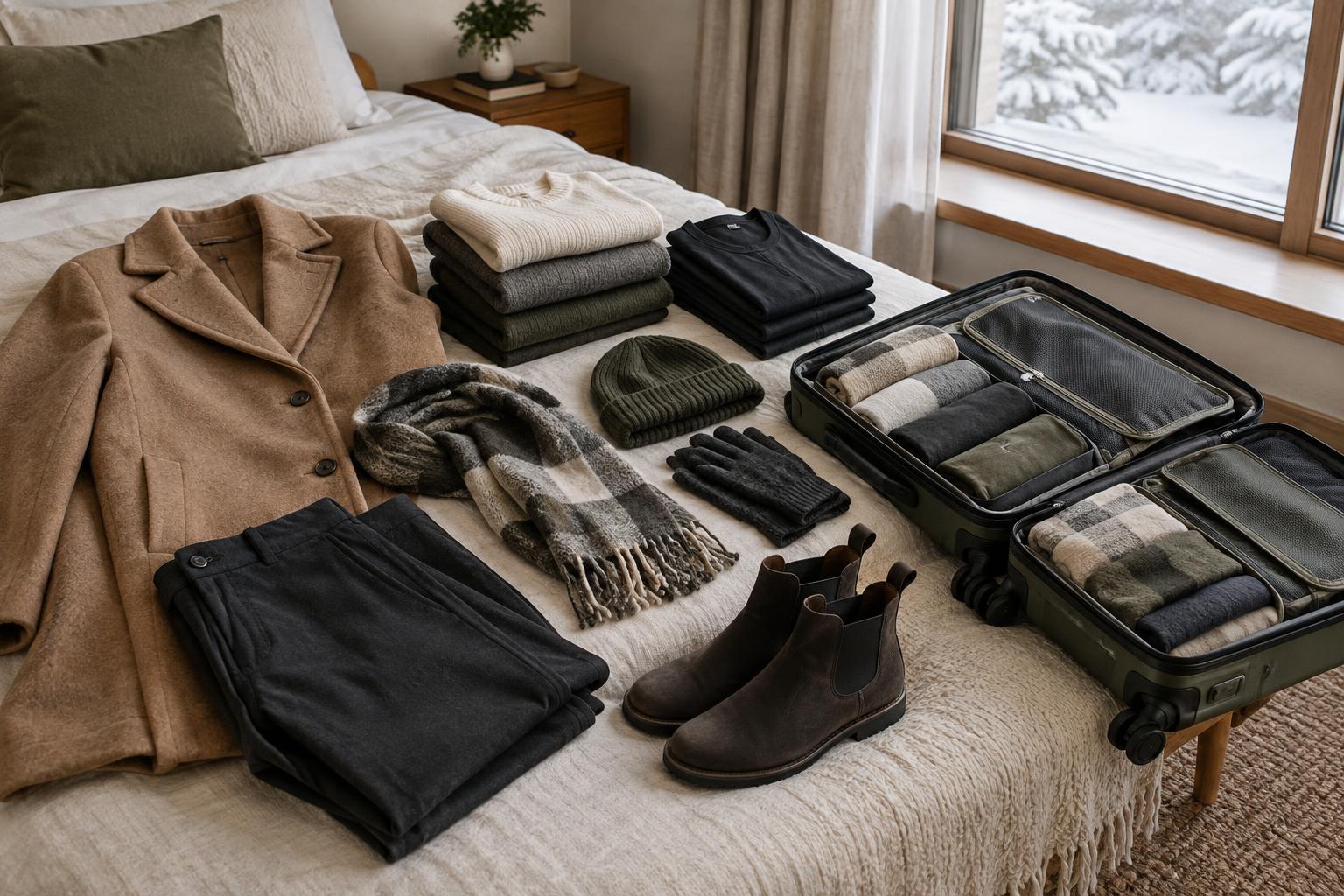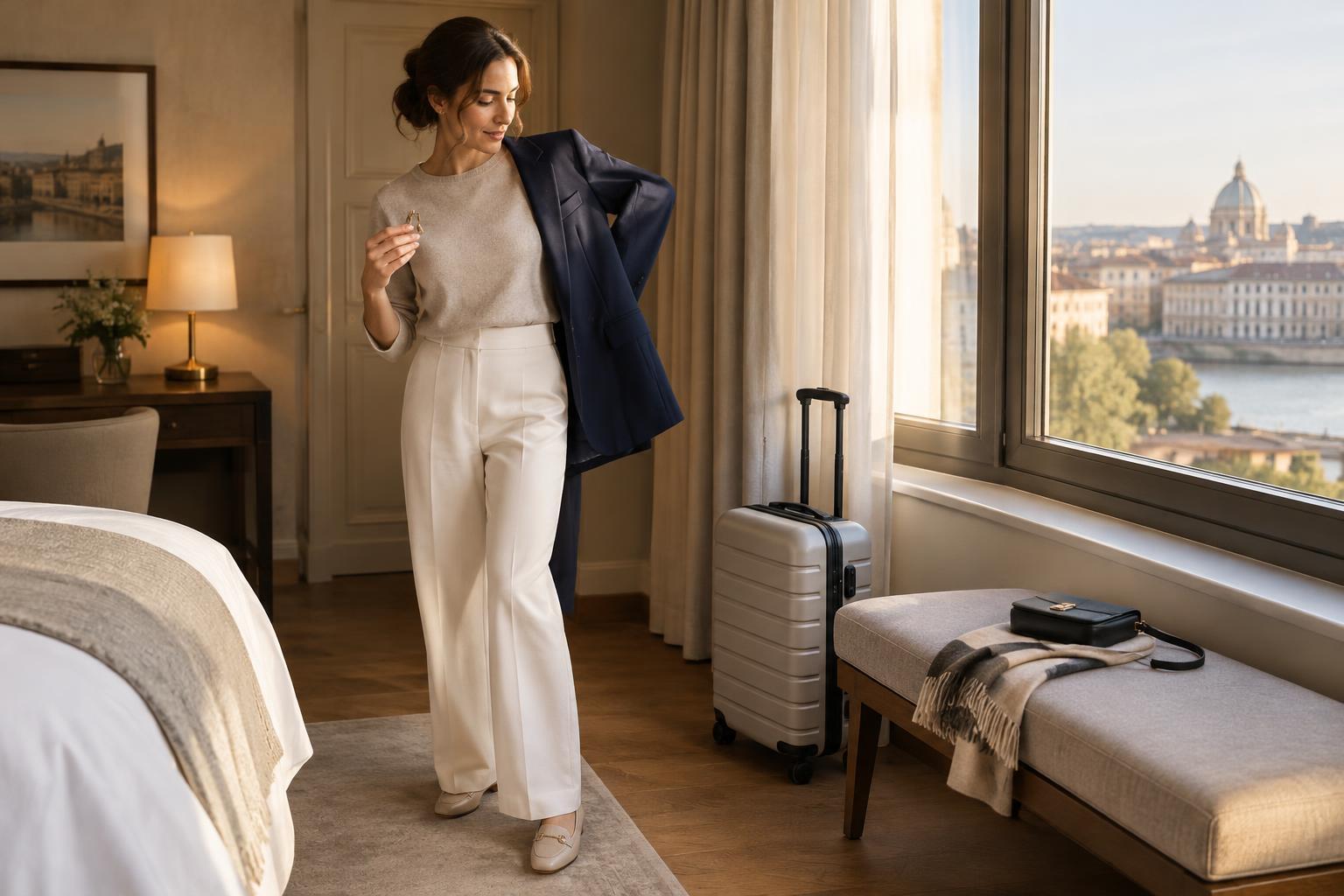
Start with a small, breathable wardrobe
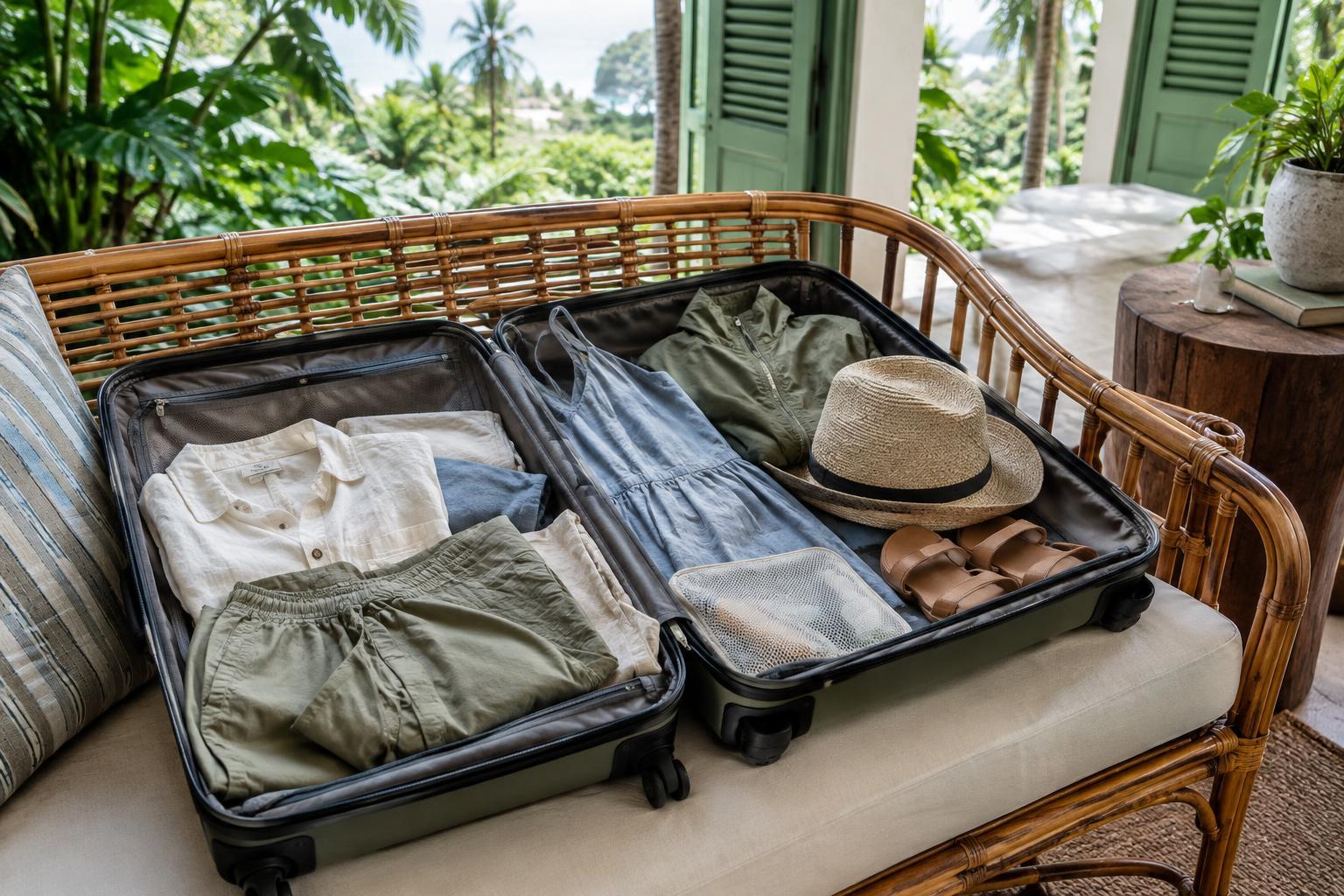
Hot, humid weather calls for clothes that feel comfortable when the air is damp, not just when you first step outside. Rather than packing a separate outfit for every day, choose a few pieces you can combine in different ways. A useful starting point is two or three tops, two bottoms, one easy dress or matching set if you wear them, and a light layer for cool indoor spaces. Adjust the number of pieces to your trip length and access to laundry.
Give those pieces room to move. A relaxed shirt, straight or wide-leg trousers, and a skirt or shorts that do not cling can feel easier to wear than tight garments in similar fabrics. Try on potential travel outfits before packing: sit down, walk around, and check whether waistbands and seams remain comfortable. Light packing works best when every piece earns its place.
Choose fabrics by feel and function
Linen is a useful option for humid days because it tends to feel airy, though it wrinkles readily. Lightweight cotton, especially in an open or fine weave, can also be comfortable; a thick cotton T-shirt may feel quite different from a thin cotton poplin shirt. Lyocell and viscose often drape softly, but some versions show moisture or take longer to dry. Check the actual garment rather than relying on the fiber name alone.
For active days or frequent sink washing, a lightweight technical fabric may be useful if it dries quickly and feels pleasant against your skin. Not every synthetic garment feels cool, however. Hold fabric up to the light to judge its density, feel whether it is stiff or clingy, and consider whether you would be comfortable wearing it twice between washes. If a thin item is see-through, plan the underlayer before it goes in your bag.
Build outfits around a simple color plan
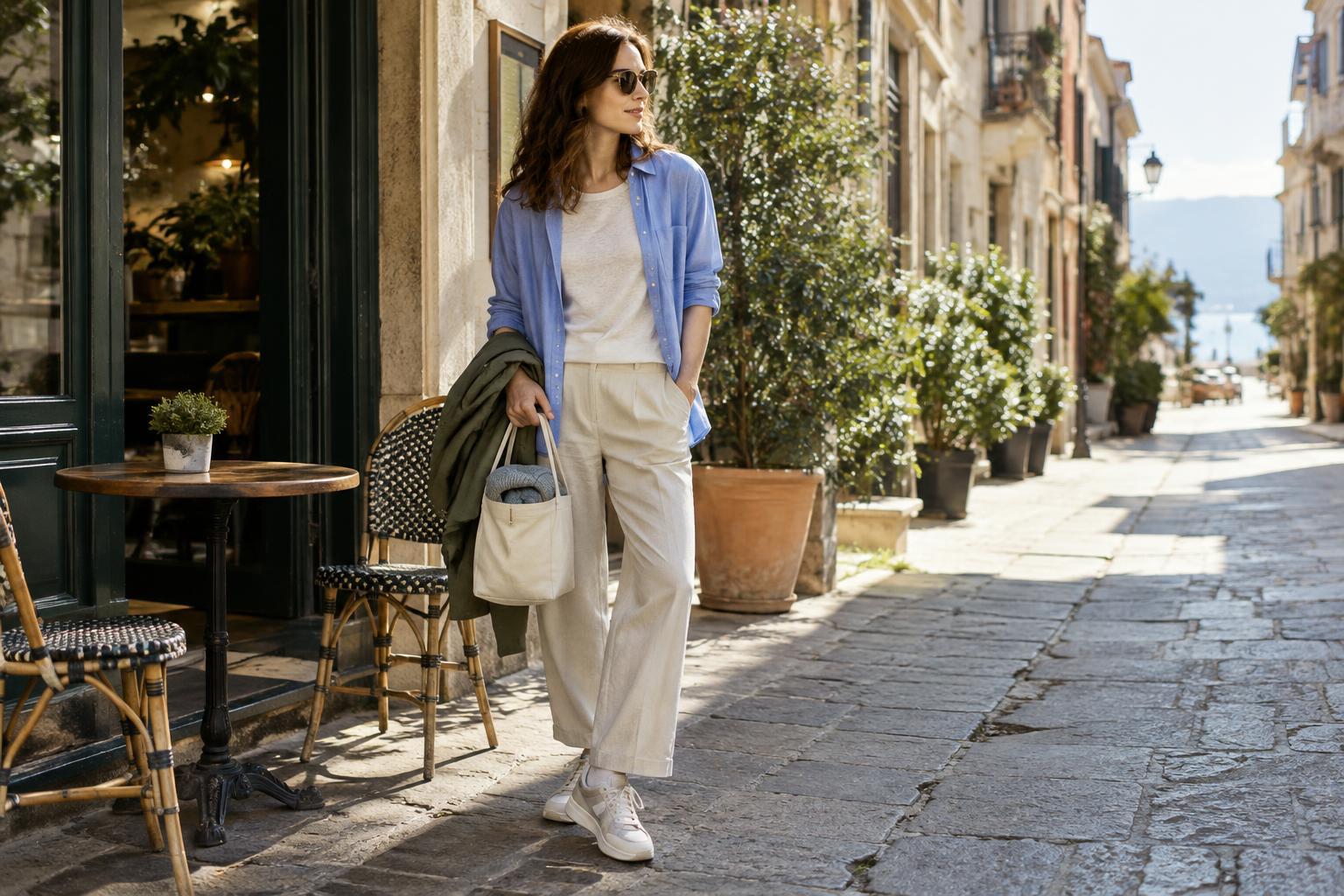
A limited palette makes a small wardrobe more flexible. Choose one or two base colors for bottoms, then add tops in shades you enjoy wearing with both. For example, navy trousers and sand-colored shorts could work with white, pale blue, and muted green tops. The point is not to dress neutrally; it is to make sure your favorite color has more than one outfit partner.
Think in complete combinations, including shoes and accessories. A loose button-front shirt can be worn open over a tank for a casual day, buttoned with trousers for dinner, or used as a light cover-up. A simple dress can change character with flat sandals and a canvas bag, then a small crossbody bag and earrings. Versatility comes from pieces you will actually wear, not from packing items solely because they seem adaptable.
Prepare for sun, rain and cold air-conditioning
Even at a hot destination, you may want coverage for bright sun, a sudden shower, or a chilly train or restaurant. A light long-sleeved shirt provides an extra outfit option without the bulk of a sweater. A compact rain shell can be useful when rain is likely, though some shells feel warm in humidity; an umbrella may be more comfortable for short walks. Check your plans and the expected conditions before deciding which to bring.
Pack footwear for the activities you have planned rather than for every possible occasion. Comfortable walking shoes and one lighter pair may be enough for many trips. If sandals are part of the plan, make sure you can walk in them for more than a few minutes. A hat, sunglasses, and a bag that leaves your hands free can make everyday outings easier without adding much volume.
Make repeat wear and laundry part of the plan
Humidity can make clothes feel ready for washing sooner, so leave a little room in your schedule for care. Choose items you can wash according to their labels and hang with space around them to dry. If you expect to wash clothes in a sink, test one item at home first: it will tell you how the fabric feels afterward and roughly how practical it is to dry. Avoid packing a piece that needs special care unless you have a clear reason to bring it.
Keep worn items separate from clean ones in a breathable laundry bag, and let damp clothes dry before packing them away when possible. For the journey home, a spare bag can contain anything that has not fully dried, but unpack it promptly. A wardrobe that supports repeat wear lets you travel with less while still having comfortable options for changing plans and changing weather.