Start with what happens after the journey
Before choosing a travel outfit, picture the first few hours after you arrive. Are you going straight to a hotel, walking around a city or meeting someone for dinner? Your answer sets the level of polish you need. If you can change clothes soon after arrival, prioritize comfort. If you cannot, wear pieces that still look intentional after several hours in a seat.
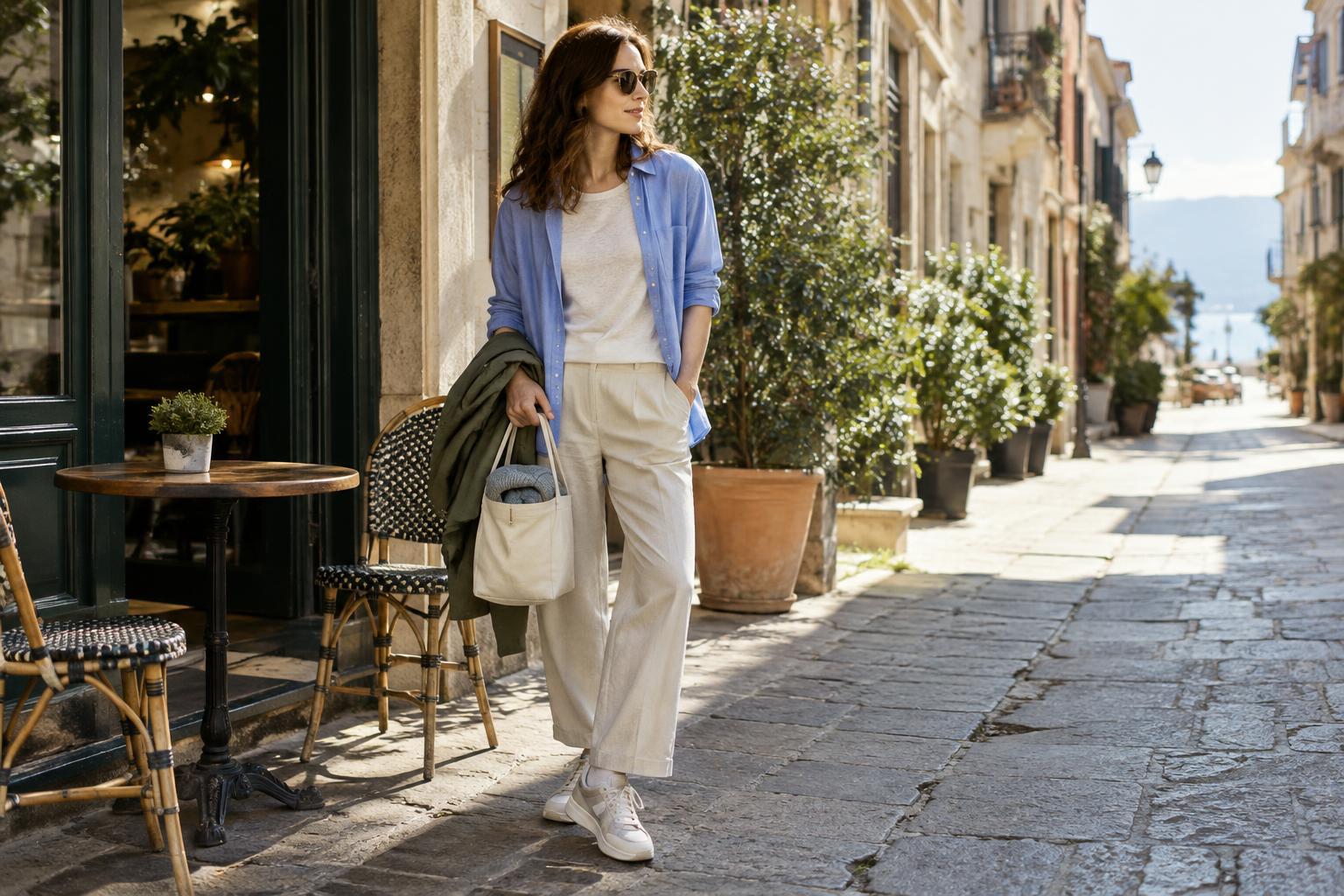
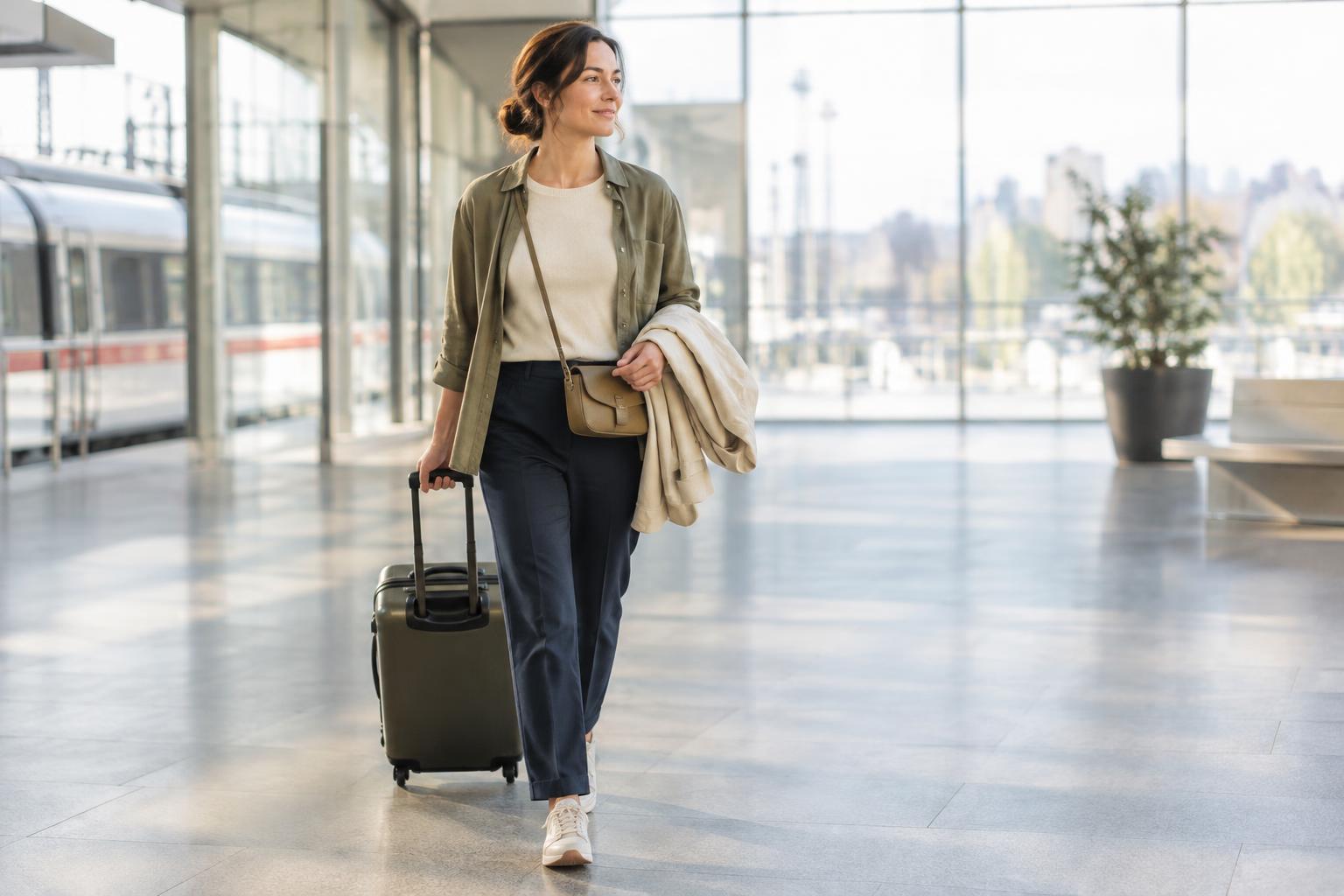
A useful starting point is an outfit you would happily wear for a casual day at your destination: comfortable trousers, a simple top and an outer layer that suits the weather. For an immediate meeting or meal, choose a neater version of the same idea, such as relaxed tailored trousers with a soft knit. You do not need a separate transit costume; you need clothes that handle the journey and your next stop.
Choose a comfortable base, then add removable layers
The base layer does the most work because you may wear it in a warm vehicle, a cool station and an unfamiliar building. Look for a top that feels good against your skin and gives you room to move. A breathable T-shirt, long-sleeved top or fine knit can all work. Check how it sits when you bend forward or reach overhead, not just when you stand in front of a mirror.
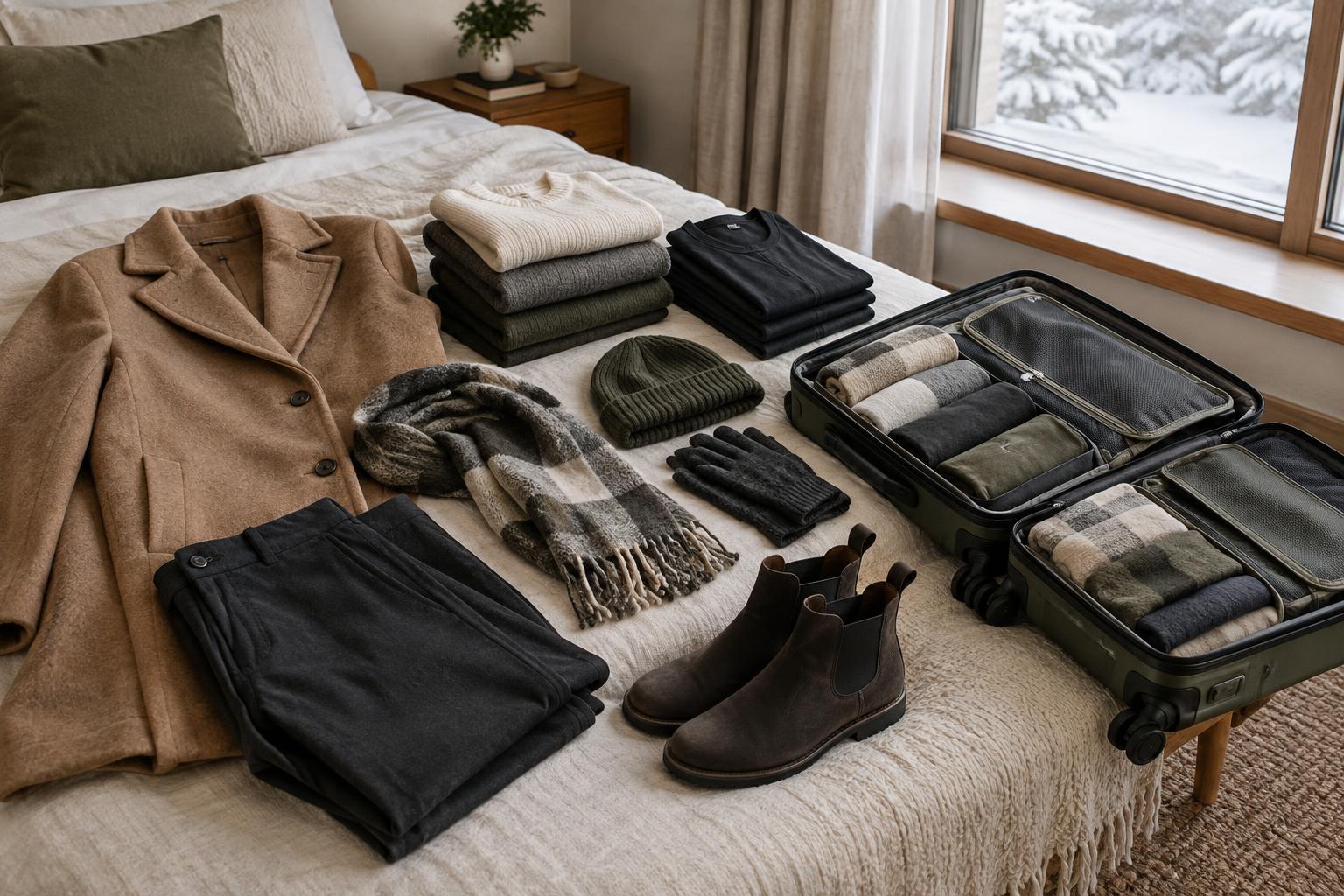
Add a layer you can remove without unpacking, such as an overshirt, cardigan or unstructured jacket. A light outer layer can go on top if the weather calls for it. This approach is usually easier to manage than one heavy garment that leaves you too warm once you are indoors. Wear the bulkiest useful layer during transit to save bag space, but make sure you can carry it comfortably when you take it off.
Pick fabrics and fits that tolerate sitting
Long periods of sitting make tight waistbands, stiff seams and fussy fastenings more noticeable. Choose trousers with enough ease at the waist and knees to sit comfortably. Straight-leg trousers with a little give, relaxed chinos or well-fitting knit trousers are possible options. If you prefer a dress or skirt, consider how it feels when seated and whether you will be comfortable walking with your luggage.
Fabric choice also affects how your outfit looks at arrival. Some materials show creases more readily than others, though construction and fit matter too. If wrinkles bother you, try sitting in the outfit at home before packing it. A textured knit, sturdy cotton or fabric with a little drape may disguise minor creasing better than a crisp, smooth surface. Avoid testing unfamiliar shoes or trousers for the first time on travel day.
Keep shoes and accessories easy to manage
Transit often involves more walking and standing than expected. Choose shoes you can wear comfortably for the whole route, not just for the time spent seated. Clean, supportive sneakers, loafers or flat boots can each suit a travel outfit, depending on your plans and the weather. If your arrival calls for dressier footwear, it may be simpler to pack those shoes and change later.
Use accessories to make the outfit practical without adding clutter. A bag with an accessible pocket keeps your phone, tickets and other essentials within reach. A scarf can add warmth or bring color to a neutral outfit, but choose one that is easy to tuck away. Limit jewelry or belts that feel awkward against a seat or need frequent adjustment. The best finishing touches are the ones you can forget about until you need them.
Plan one small adjustment for arrival
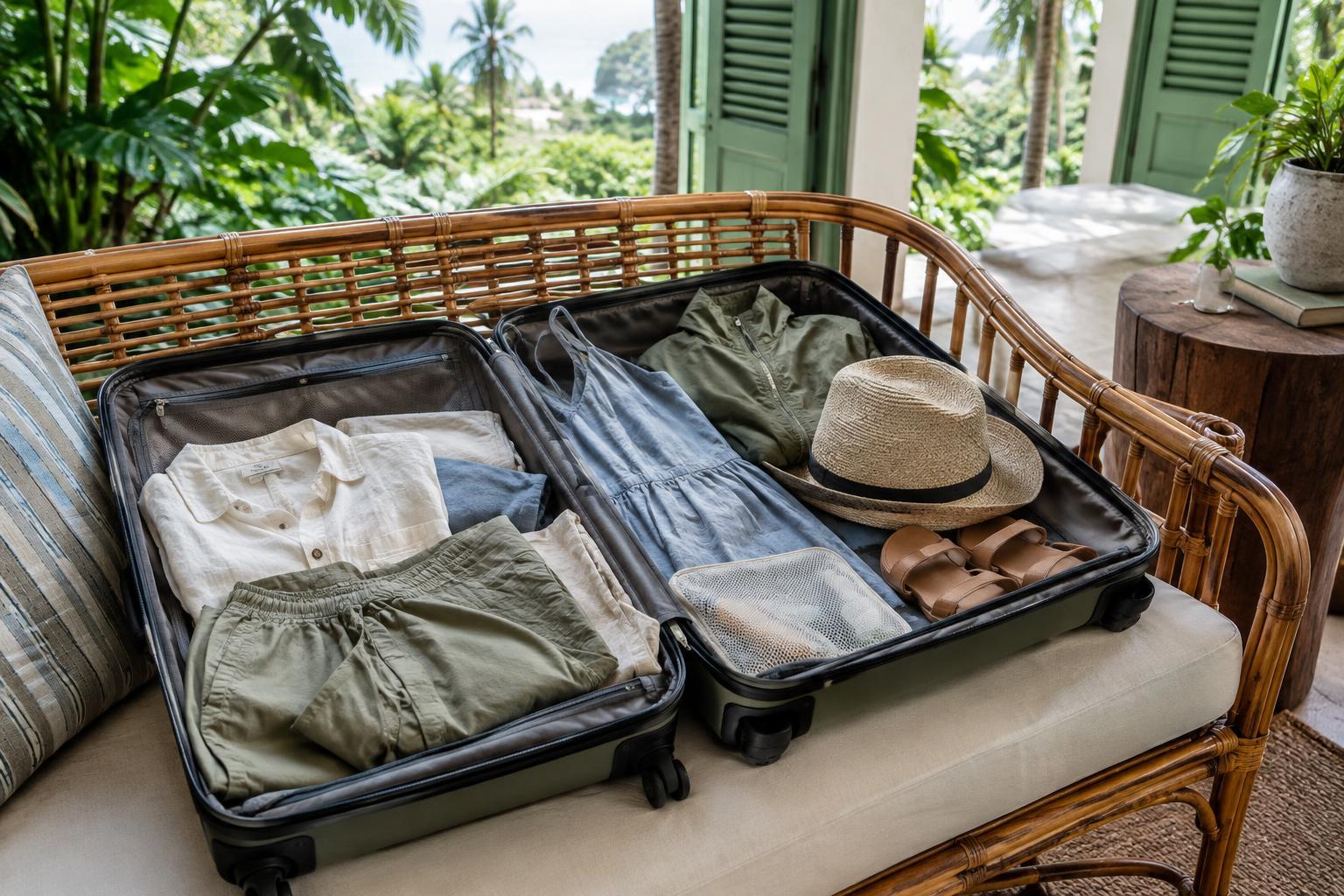
A simple change can make a transit outfit feel fresh without requiring a complete replacement. You might swap a T-shirt for a packed shirt, remove a casual overshirt to reveal a neat knit, or change shoes before heading out. Keep the item you plan to use near the top of your bag rather than buried under everything else. If you expect to arrive without a place to change, choose an adjustment you can make easily in an appropriate space.
For example, a train outfit of dark relaxed trousers, a plain top, a cardigan and comfortable loafers can work throughout the journey. On arrival, you can remove the cardigan and add a scarf for a casual dinner, or put on a jacket you carried separately for a more polished look. Planning that final step before you leave helps you pack less and dress with more confidence.