Start with your plans, not a fixed number
The right amount to pack depends less on the number of days away than on what you will do each day. A relaxed city break might call for one outfit that works from sightseeing to dinner. A trip involving muddy walks, formal events or changing weather needs more options. Before counting clothes, list your main activities and note anything that requires a specific item.
Next, decide what you can comfortably wear more than once. A sweater or pair of trousers may work for several outings, while underwear and socks are usually best packed for each day between washes. Fabric, weather and personal preference all affect how often you will want a fresh piece. If laundry is available and you are willing to use it, pack for the days between washes rather than the full trip.
Treat the quantities below as starting points, not rules. They include the clothes you travel in, so subtract those from what goes into your bag. Choose a small color palette, and check that each bottom works with at least two tops. That gives you more outfits without requiring a separate look for every day.
For a weekend: pack for two or three days
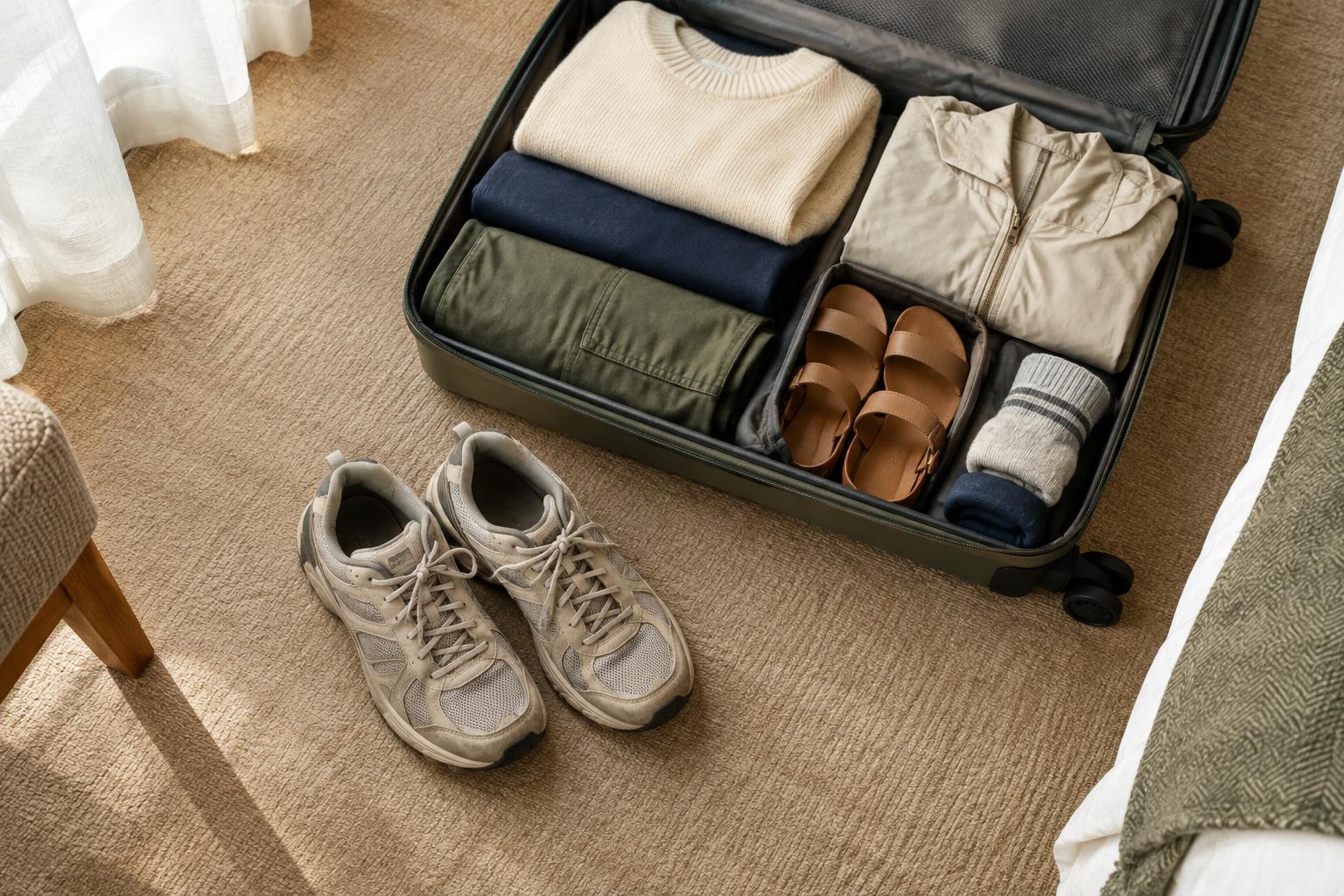
For a typical weekend away, aim for two or three tops, one or two bottoms, one versatile midlayer such as a cardigan or light sweater, and underwear and socks for each day. Add sleepwear if you use it. Wear your bulkiest shoes and outer layer in transit; pack a second pair of shoes only if your plans genuinely require it, such as a dressier dinner or a wet-weather activity.
One simple combination is to travel in jeans, a T-shirt and a jacket, then pack a second top and a lighter pair of trousers. A shirt that layers over a T-shirt can serve as an extra outfit option without taking much space. If the forecast suggests rain or cooler evenings, prioritize a suitable outer layer over an additional fashion item.
For one week: build around repeatable outfits
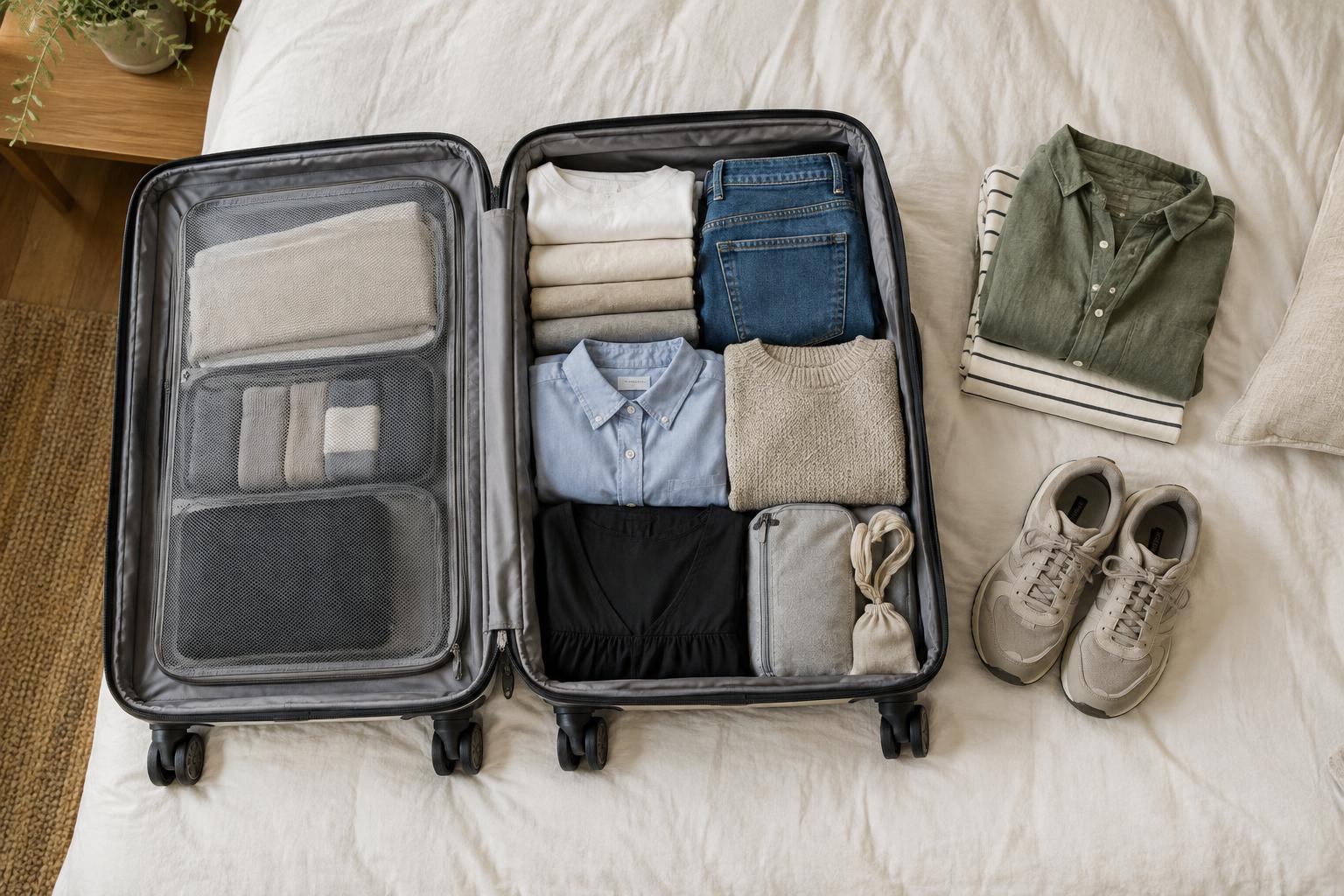
For a week without laundry, a useful starting point is five to seven tops, two or three bottoms, one or two midlayers, and enough underwear and socks for the trip. One pair of everyday shoes plus a second pair for a distinct activity is often more useful than several similar pairs. Adjust the top count if you expect to change after exercise, spend time in hot weather or attend events with different dress requirements.
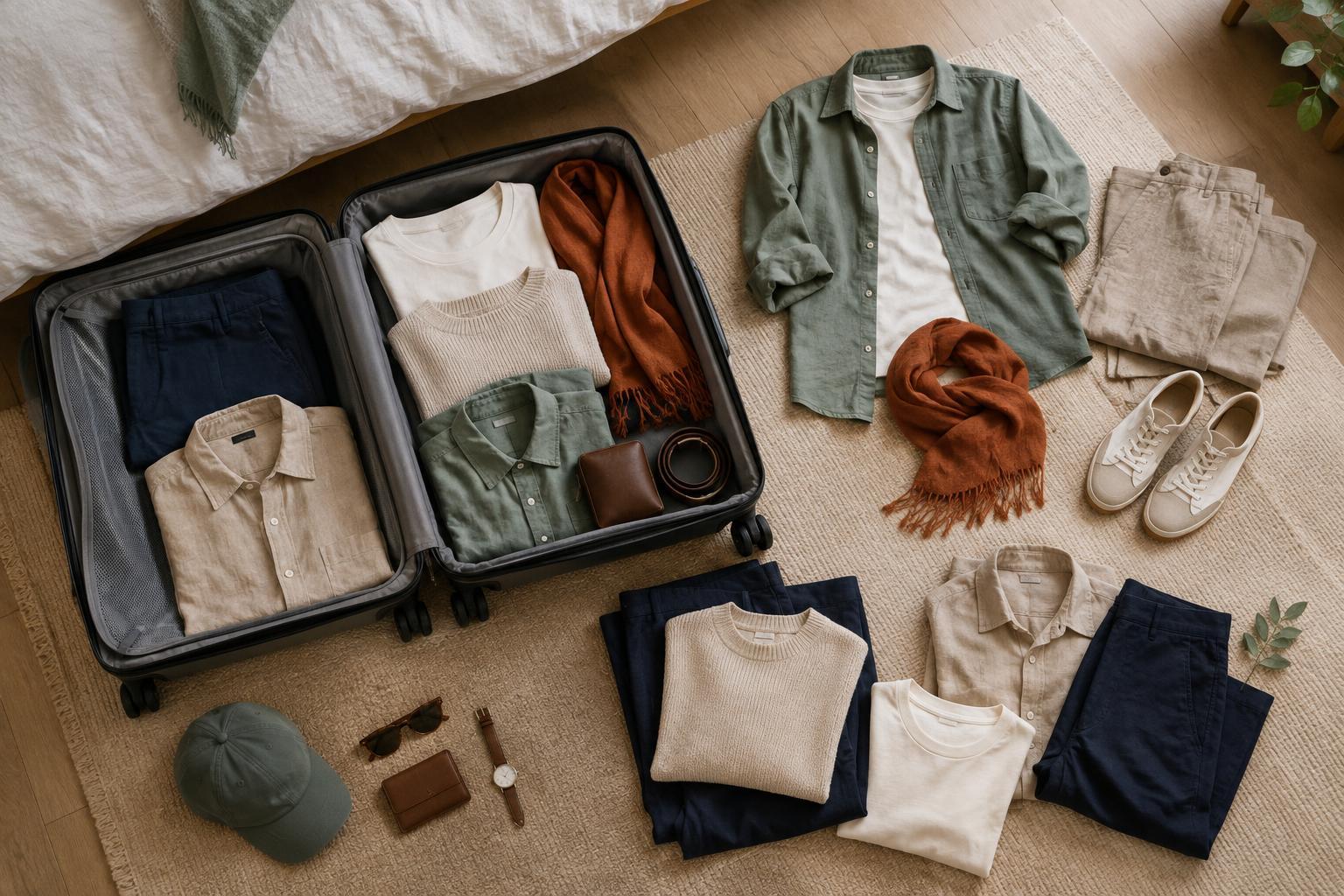
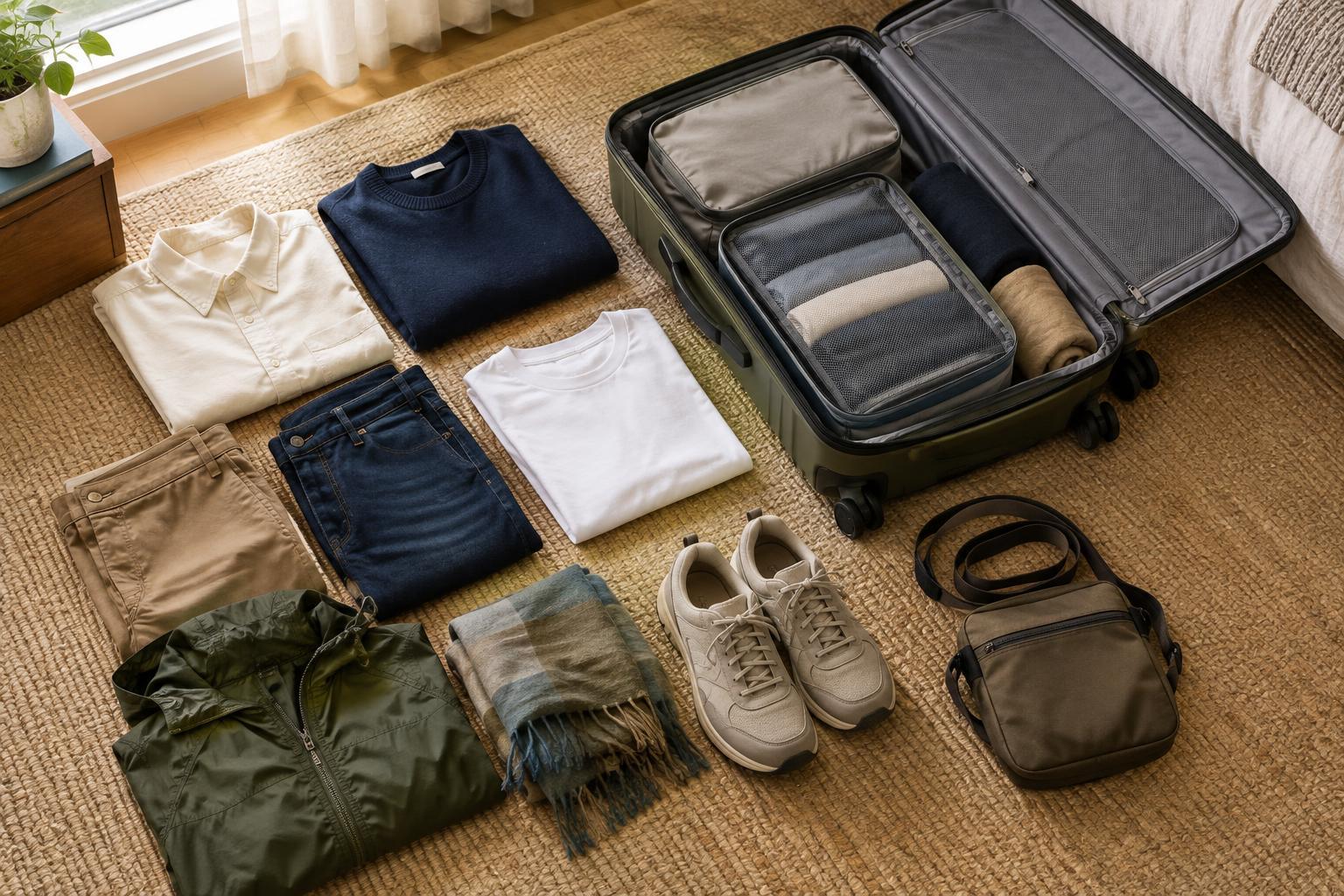
To make those pieces work harder, vary texture and silhouette rather than packing entirely separate outfits. For example, a plain T-shirt can be worn under an open shirt during the day, while the shirt can be buttoned and paired with tailored trousers later. A neutral jacket can go over either combination. Lay the pieces out before packing and make several complete outfits, including shoes and outerwear. If an item works with only one outfit and has no special purpose, consider leaving it behind.
If you can do laundry midway through the week, you may be comfortable with three or four tops and fewer basics. Pack a small bag for worn clothes so you can keep them separate until wash day.
For two weeks: plan a laundry rhythm
For a two-week trip, packing fourteen entirely different outfits is rarely necessary. If you expect to wash clothes about once a week, start with five to seven tops, three bottoms, one or two midlayers, and roughly a week’s worth of underwear and socks. Add the outerwear and activity-specific clothing your destination requires. Without reliable laundry access, bring more next-to-skin items, but consider whether a quick wash during the trip would be easier than carrying a much larger bag.
Longer trips make versatility especially valuable. Two bottoms in complementary neutral colors and a third in a different fabric or shape can create variety with the same tops. Choose layers you can put on together, rather than several heavy pieces that each take up space. If your trip crosses different climates, favor a light base layer, a warm layer and appropriate weather protection that can be combined as needed.
Do one final check before closing the bag
Try a quick outfit count: can you dress for each planned activity, including travel days, with what you have chosen? Then check for easy-to-forget essentials such as sleepwear, swimwear or comfortable walking socks. Pack for a plausible change in weather, but avoid adding multiple “just in case” outfits for situations that are unlikely or already covered by another combination.
Finally, make sure you can carry the bag comfortably and find what you need. Leave a little space for worn clothes, which may not fold as neatly on the return journey. A useful travel wardrobe is not the smallest possible one; it is the amount that lets you get dressed easily, care for your clothes and enjoy the trip.