Start with the clothes you actually want to wear
A travel color palette is not a rule that every item must match every other item. It is a small group of colors that makes it easy to get dressed from the pieces you packed. Before choosing colors, think about the trip: the expected weather, how much walking you will do, and whether you need outfits for restaurants, work or outdoor time. Those details matter more than picking a palette that looks tidy on paper.
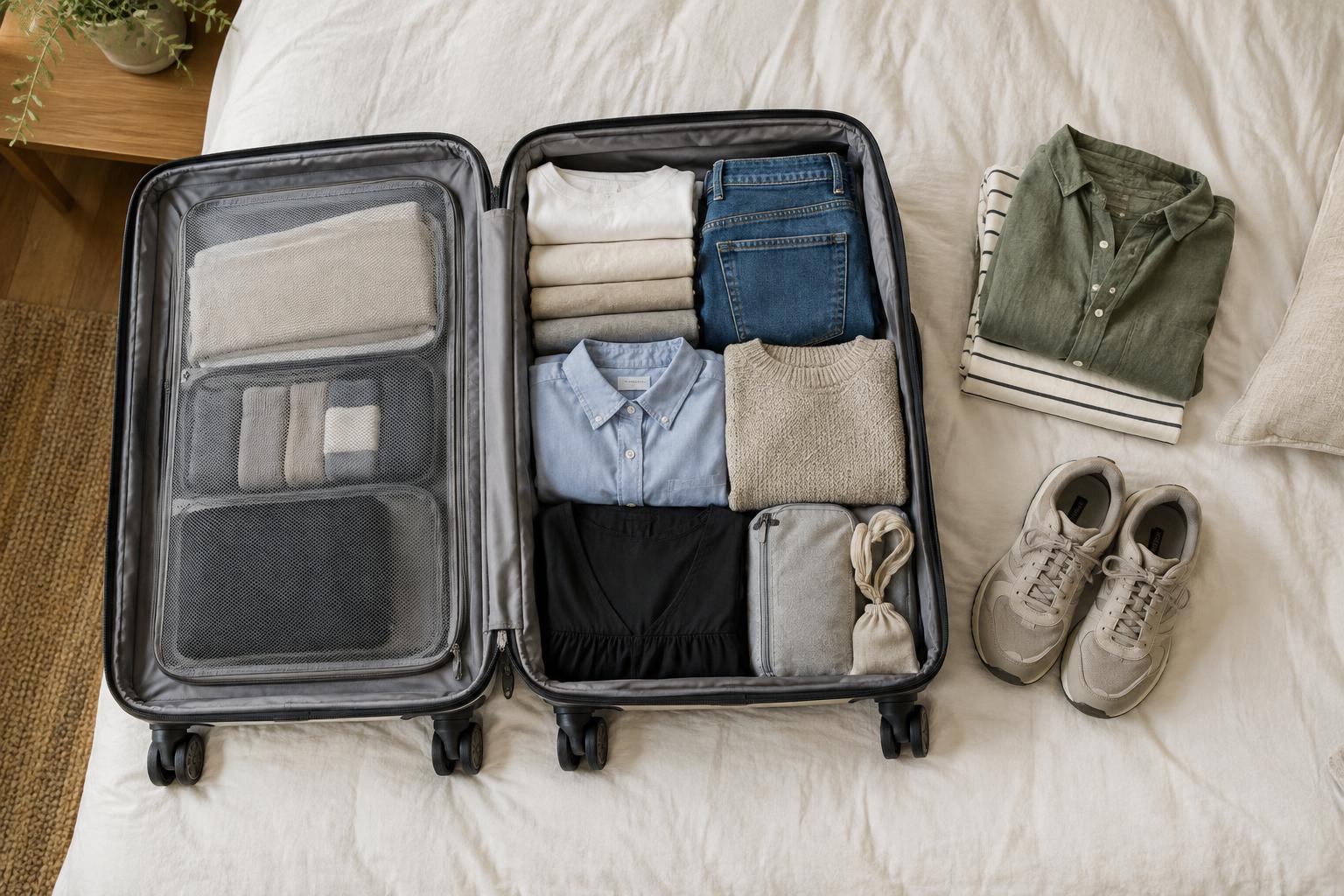
Look at a few garments you already reach for at home. If you regularly wear a navy shirt, dark jeans and a striped layer, those may be better starting points than an all-beige wardrobe you rarely enjoy. A palette works best when its colors suit your preferences and its garments suit the trip. Pack clothes you would be comfortable wearing more than once, rather than building around a single special outfit.
Choose two base colors and a light or dark counterpoint
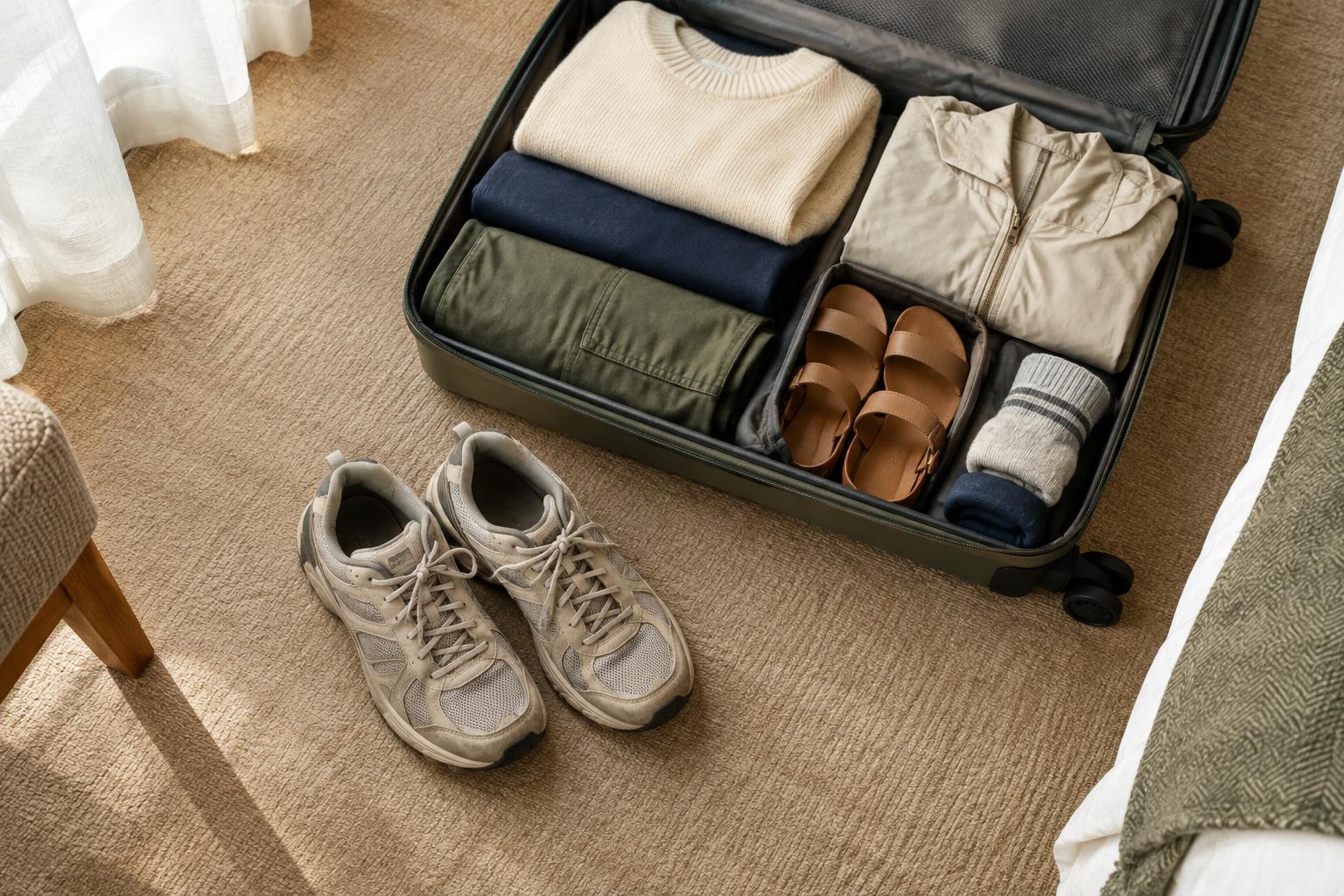
Base colors do much of the mixing work. They often appear in trousers, skirts, outerwear or shoes: pieces you may wear repeatedly. Choose two that you already like together, such as navy and cream, charcoal and olive, or chocolate brown and denim blue. They do not have to be neutrals, but they should give several of your tops and layers a place to go.
Then add a counterpoint to keep outfits from feeling flat. With navy and cream, that might be a medium blue shirt or a darker jacket. With charcoal and olive, an ivory tee can brighten both. Aim for a useful range of light and dark rather than a stack of nearly identical shades. If every packed item is dark, you may want one lighter piece near your face; if everything is pale, a darker layer can add definition.
Use accent colors where they are easy to repeat
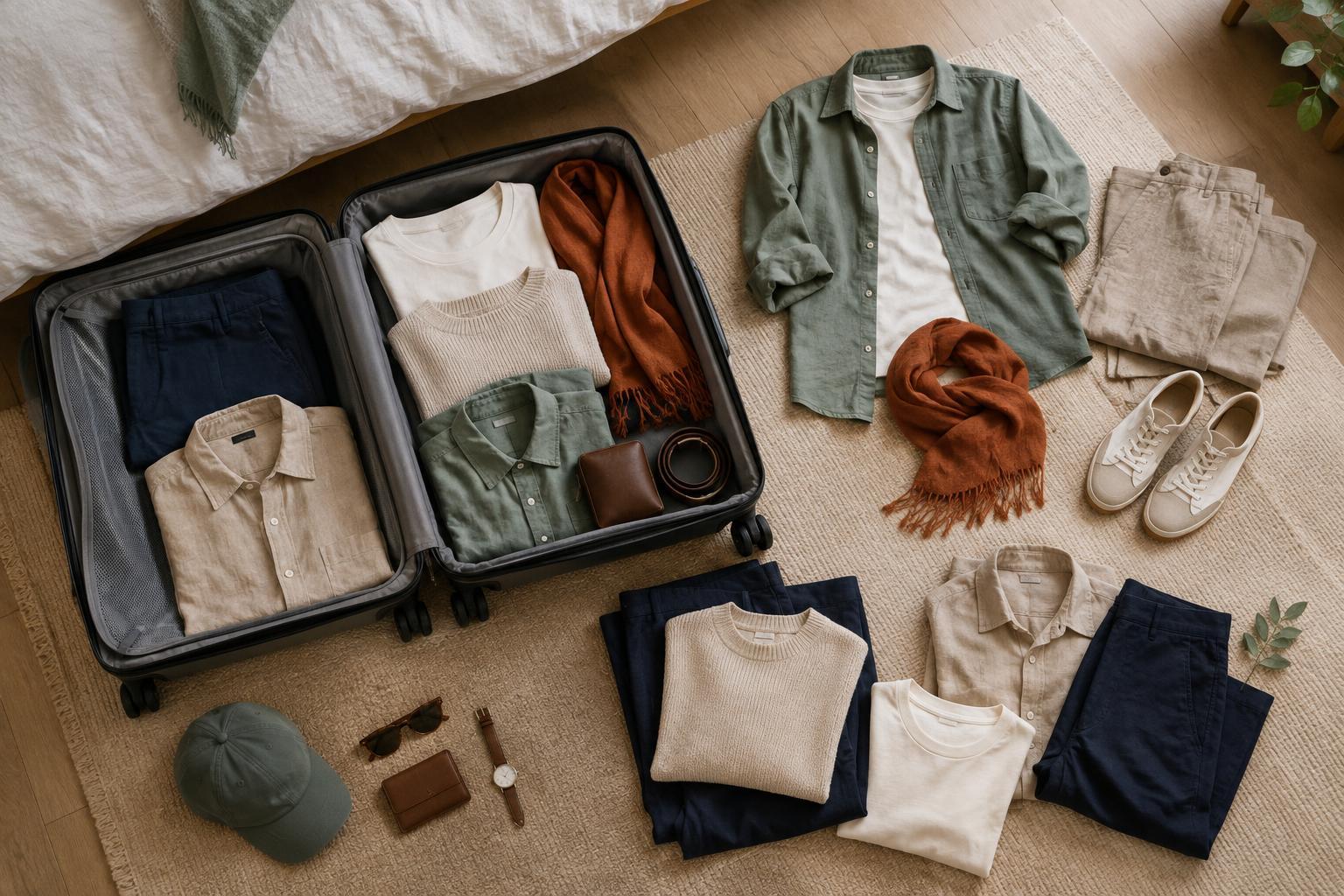
One or two accent colors can make a compact wardrobe feel personal. A rust scarf, a blue striped shirt or a green knit can add variety without demanding a separate outfit plan. An accent is easiest to use when it works with both base colors, or when it appears in a pattern that connects them. For example, a navy-and-cream striped top sits naturally beside navy trousers, cream trousers and a denim jacket.
You do not need to match every accessory precisely. Shoes and bags are often easiest to pack in a versatile color you already wear, while a smaller item can carry a brighter shade. If you love colorful shoes, let them be the accent and keep the clothes around them simple. The goal is repeatable combinations, not a perfectly coordinated suitcase.
Test outfits before anything goes in the bag
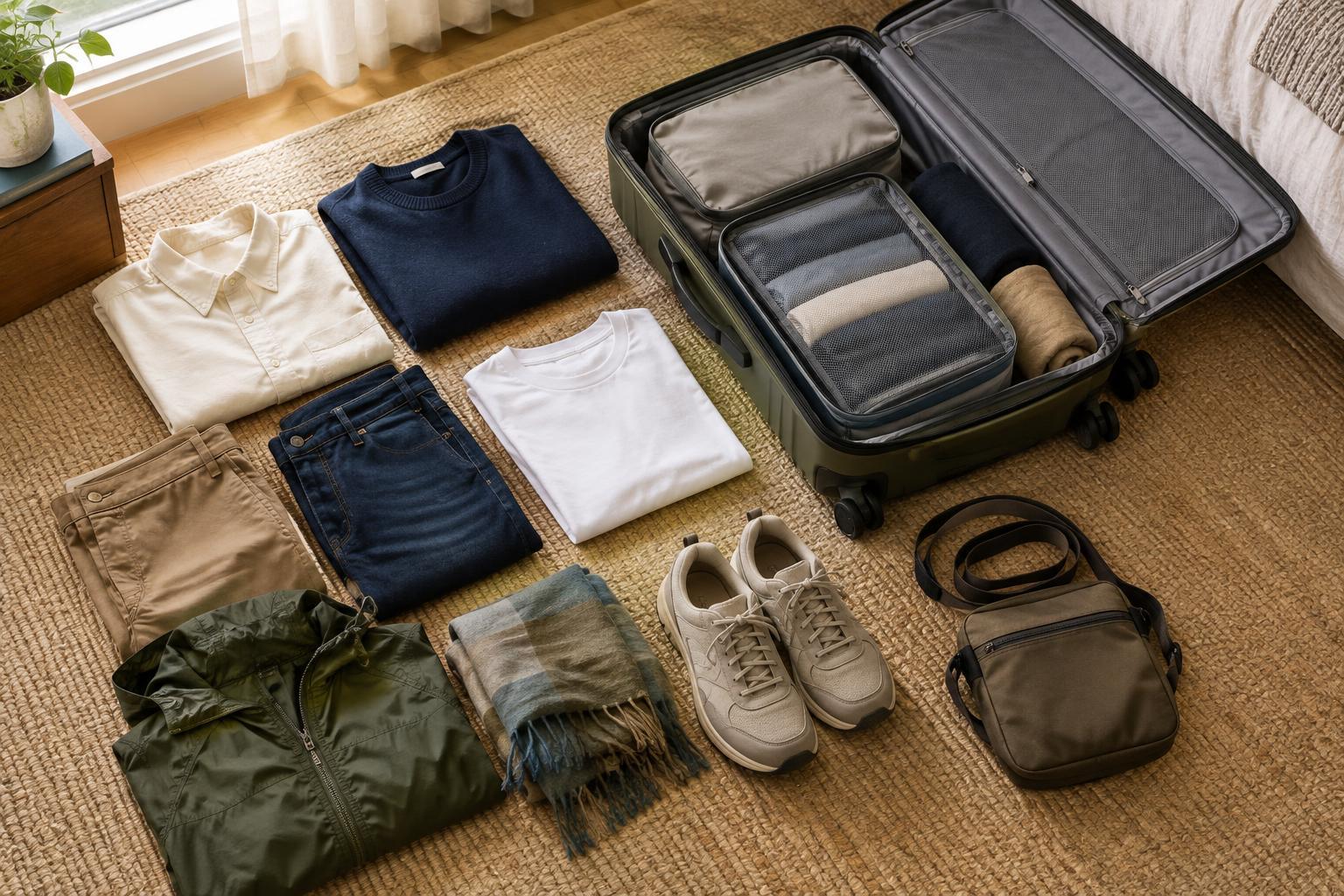
Lay out your possible travel clothes and make complete outfits for the situations on your itinerary. Try each bottom with at least two tops and a suitable layer. Check how the colors look together in the proportions you will actually wear: a bold top can feel quite different under an open jacket than it does on its own. Take a quick photo of combinations you like if that helps you remember them later.
Notice pieces that have only one partner. They are not automatically wrong, but they should earn their space. A dress you will wear to a planned event may be worth packing even if it does not mix much; a second pair of trousers that works with nearly every top may be more useful than an extra statement piece. This outfit test also catches practical gaps, such as having several light tops but no layer that works over them.
Make room for weather, wear and your own style
Color is only one part of a travel wardrobe. A white shirt may pair with everything but be less convenient for a messy travel day; a favorite black layer may be worth bringing even if it sits outside your main palette. Consider how easily items can be washed, dried or worn again, especially if laundry access is limited. Fabric texture can help, too: a knit, crisp shirt and smooth jacket can look distinct even when their colors are similar.
Before closing your bag, remove any piece you included only because it fits the palette. Keep the ones that fit your activities, feel comfortable and give you outfits you look forward to wearing. A good travel palette reduces decisions while leaving room for the colors and combinations that feel like you.