Start with the walking you will actually do
Before choosing shoes, picture an ordinary day on your trip rather than the most photogenic outfit. Will you spend hours on pavement, climb stairs, cross uneven streets, or walk on trails? Will you be outdoors in likely rain or heat? A shoe that feels fine for a short errand may be less pleasant after a full day of sightseeing. Let the most demanding walking day set your minimum standard for comfort and grip.
For mostly urban travel, a supportive sneaker or another comfortable walking shoe is often the easiest starting point. For mixed city and trail days, look for a sole that feels secure on both surfaces without being so bulky that you avoid wearing it elsewhere. If the trip calls for dressier clothes, consider how formal those occasions really are before giving precious luggage space to a pair you might wear only once.
Choose the main pair by fit, not appearance alone
Your main pair should feel good with the socks you plan to wear. Check that your toes have room to move, your heel does not slip excessively, and no seam or edge rubs as you walk. Try both shoes, since feet and shoes do not always feel identical on each side. A lightweight shoe is useful only if it also feels stable and comfortable to you.
Avoid making a brand-new pair your only option for a walking-heavy trip. Wear it on several normal outings first, including a longer walk, to notice pressure points and learn which socks work best. If you use insoles, test the complete combination before you leave. On the trip, small choices matter too: fastening shoes securely and changing out of damp socks can make repeated walking days more comfortable.
Make a second pair earn its space
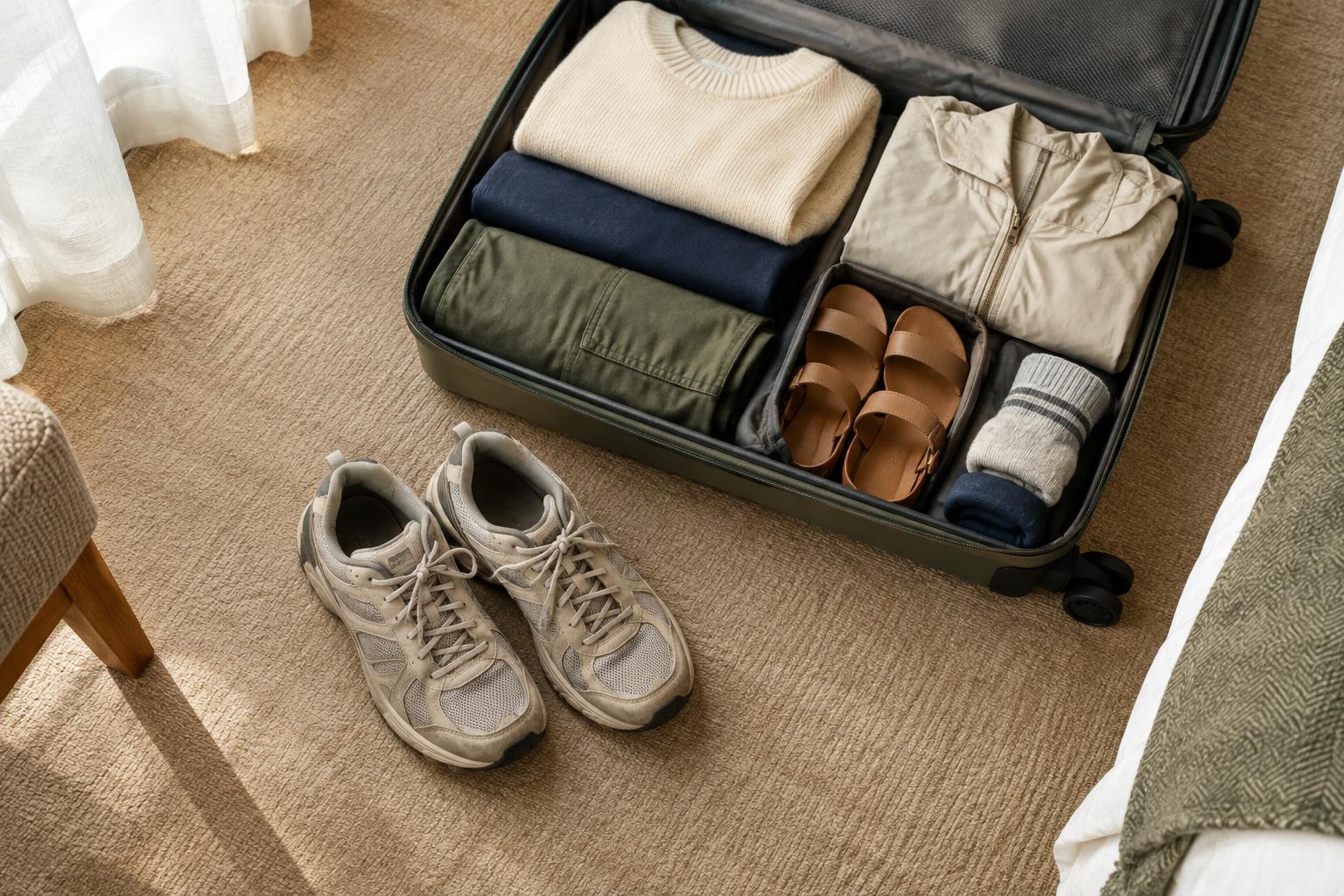
If you can take two pairs, give them different jobs. Your first pair handles long walking days; the second might be a compact sandal for warm-weather evenings, a simple flat for dressier plans, or a weather-appropriate alternative when the main pair needs to dry. Two pairs that serve the same purpose but differ only in color offer less value when space is limited.
A second pair should still be wearable for more than a few minutes. A slim shoe that pinches is not a useful backup. Think through at least three outfits and several activities you could pair it with. If you cannot name when you would wear it, leave it behind. For trips with genuinely varied conditions, such as wet trails and formal events, packing a third pair may be reasonable; it should be a deliberate exception rather than a default.
Build outfits around a small shoe palette
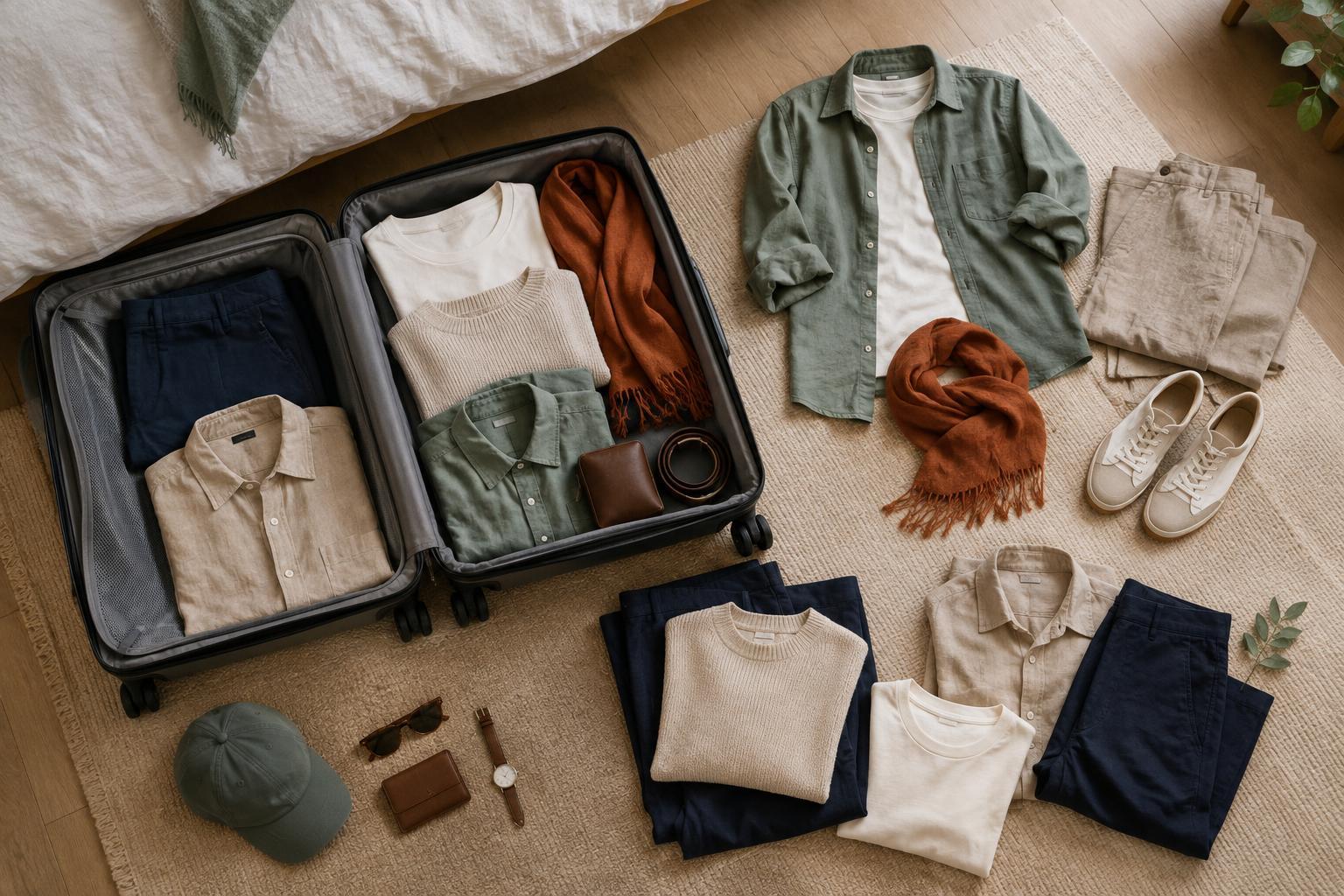
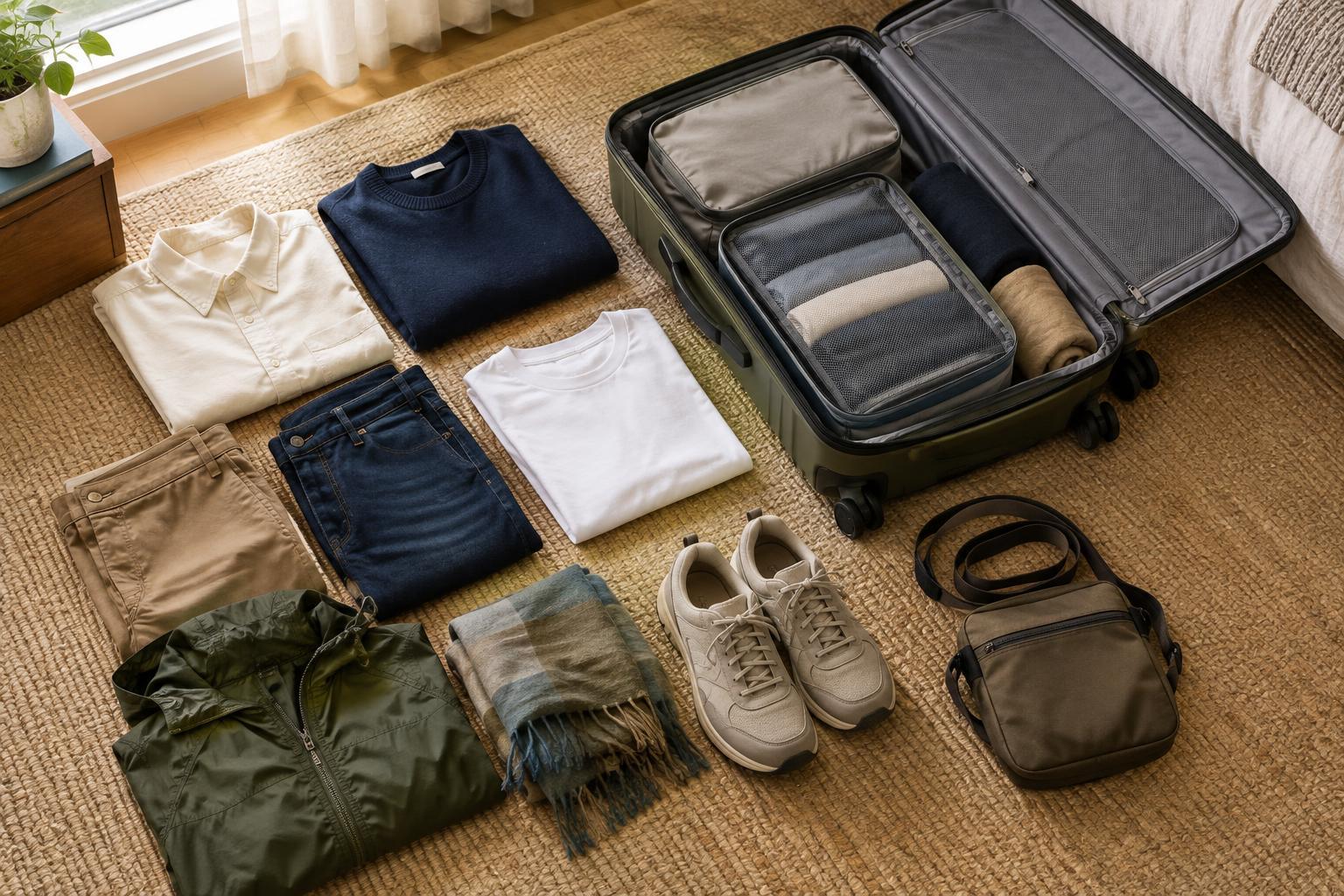
Shoes take up more room than many clothing items, so let their colors guide the rest of your wardrobe. A pair in a versatile shade, such as black, brown, navy, cream, or gray, can connect several outfits. The best choice is not necessarily a neutral in theory; it is the one that works with the trousers, dresses, and outerwear you are actually bringing.
For example, dark sneakers may work with straight-leg trousers, jeans, and a casual dress, while a compact tan sandal can make the same pieces feel lighter in warm weather. If your main shoes are sporty, balance them with simple, well-fitting clothes rather than packing separate footwear for every look. Also consider fabric and finish: smooth materials may look neater with tailored pieces, while textured or canvas styles often suit relaxed outfits.
Pack and care for the pairs you choose
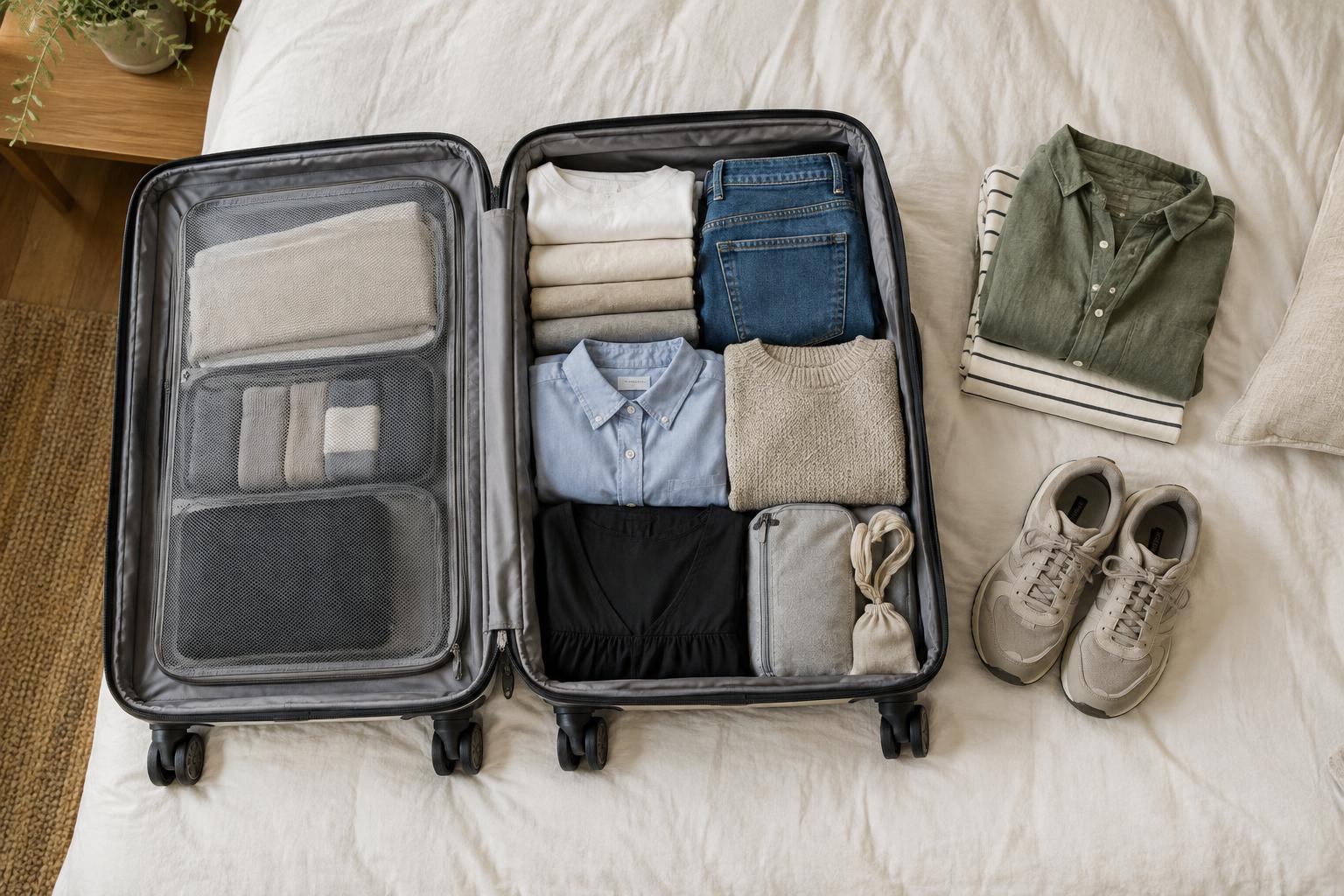
Wear the bulkiest, most comfortable pair in transit if it also suits the journey. Pack the smaller pair in a shoe bag or reusable pouch to keep soles away from clean clothes. Filling shoes with socks can help use otherwise empty space, but avoid overstuffing anything that could lose its shape. If luggage is very tight, measure the space a second pair would occupy before deciding it is essential.
A little upkeep helps a limited selection go further. Brush off dry dirt, let shoes air out after long days, and allow wet pairs to dry away from direct heat if their materials require gentle care. Pack socks suited to your shoes and expected weather, plus enough pairs to change when needed. The goal is not to find one perfect shoe for every possible situation, but to bring the fewest pairs that let you walk comfortably and get dressed without fuss.