Why a flat surface matters
Knitwear is made from interlocking loops of yarn. When a sweater is wet, those loops can shift, and the extra weight of water may pull the garment out of shape. Hanging a wet knit from its shoulders can leave bumps or lengthen the body and sleeves. Drying it flat supports the whole garment while it dries.
Start with the care label. It may specify hand washing, a gentle machine cycle, a water temperature, or professional cleaning. Follow those directions before attempting to reshape the piece. Reshaping can help an item settle after washing, but it cannot reliably reverse felting, severe shrinkage, or stretched-out elastic. Treat the process as gentle guidance rather than a way to force a garment into a new size.
Remove water without pulling
After washing, lift the knitwear with both hands and support its full weight. Avoid picking it up by a shoulder, cuff, or hem. If you have washed it in a basin, let excess water drain briefly while the garment is supported; do not wring or twist it. For a machine-washed item, take it out promptly so it does not sit crumpled in the drum.
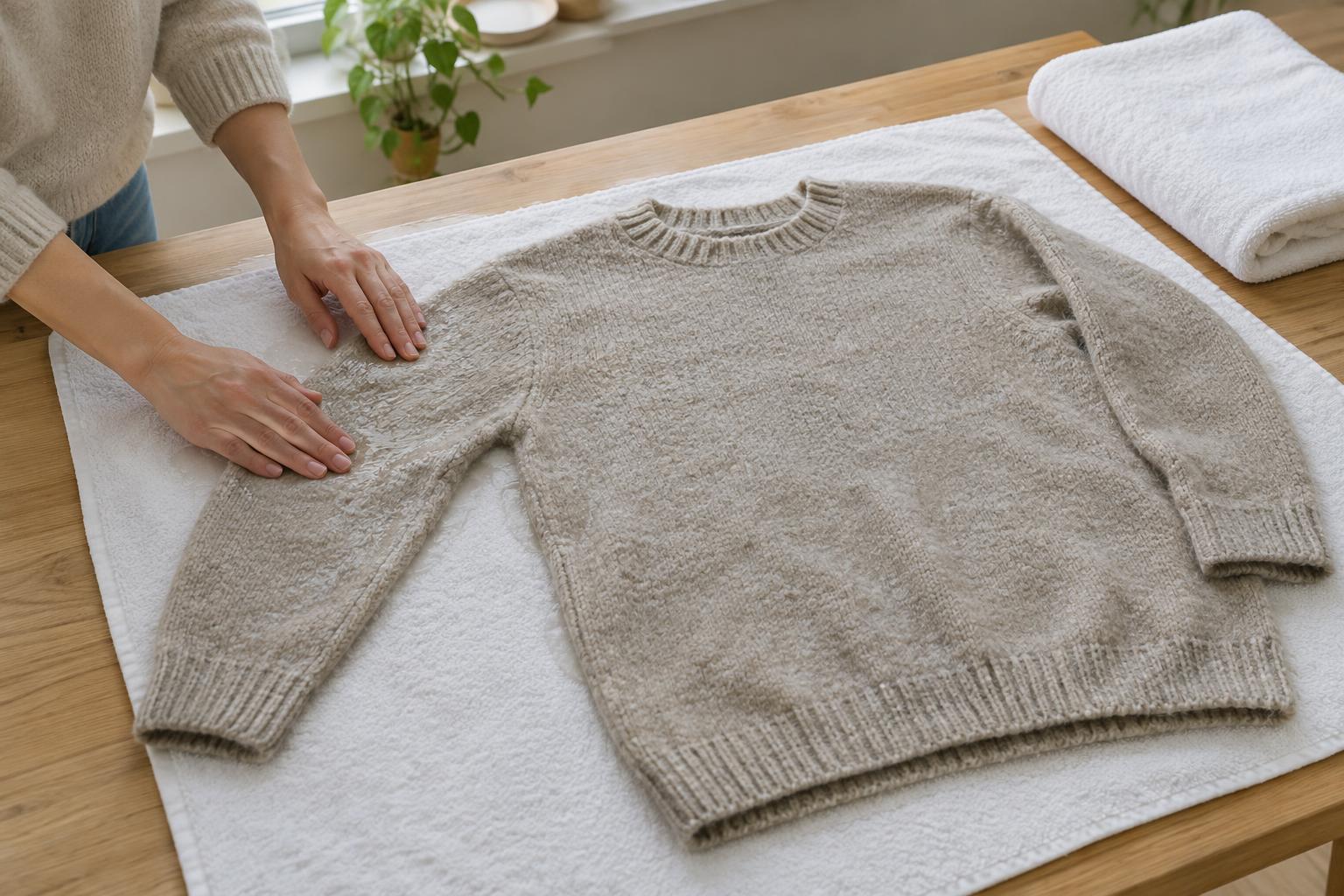
Lay the piece on a clean, dry towel. Roll the towel and knit together, then press along the roll to absorb water. Unroll it and repeat with another dry towel if the knit still feels heavy. This step reduces drying time and makes the garment easier to move without stretching. Use towels that will not shed lint or transfer dye onto the knit.
Guide the garment back into shape
Choose a clean, flat drying surface where air can circulate. A mesh drying rack works well; a dry towel spread over a suitable flat surface can also work if you change it when it becomes damp. Lay the garment down with the front facing up and ease it into its familiar outline. Smooth the shoulders, align the side seams, and place the sleeves so they are not twisted.
Use small movements with your palms instead of tugging at an edge. If one sleeve looks longer than the other, gently bring them into balance. Straighten the hem and cuffs, but avoid pulling ribbing wide. For a cardigan, align the front edges and button it loosely if that helps them sit evenly; do not stretch the button band to make it meet.
A well-fitting sweater can serve as a visual reference, provided you are comparing similar shapes. You might check the body width, sleeve length, and shoulder position, then adjust the wet piece a little at a time. The aim is to restore its usual proportions, not to stretch a shrunken garment to match a measurement it can no longer comfortably reach.
Let it dry thoroughly
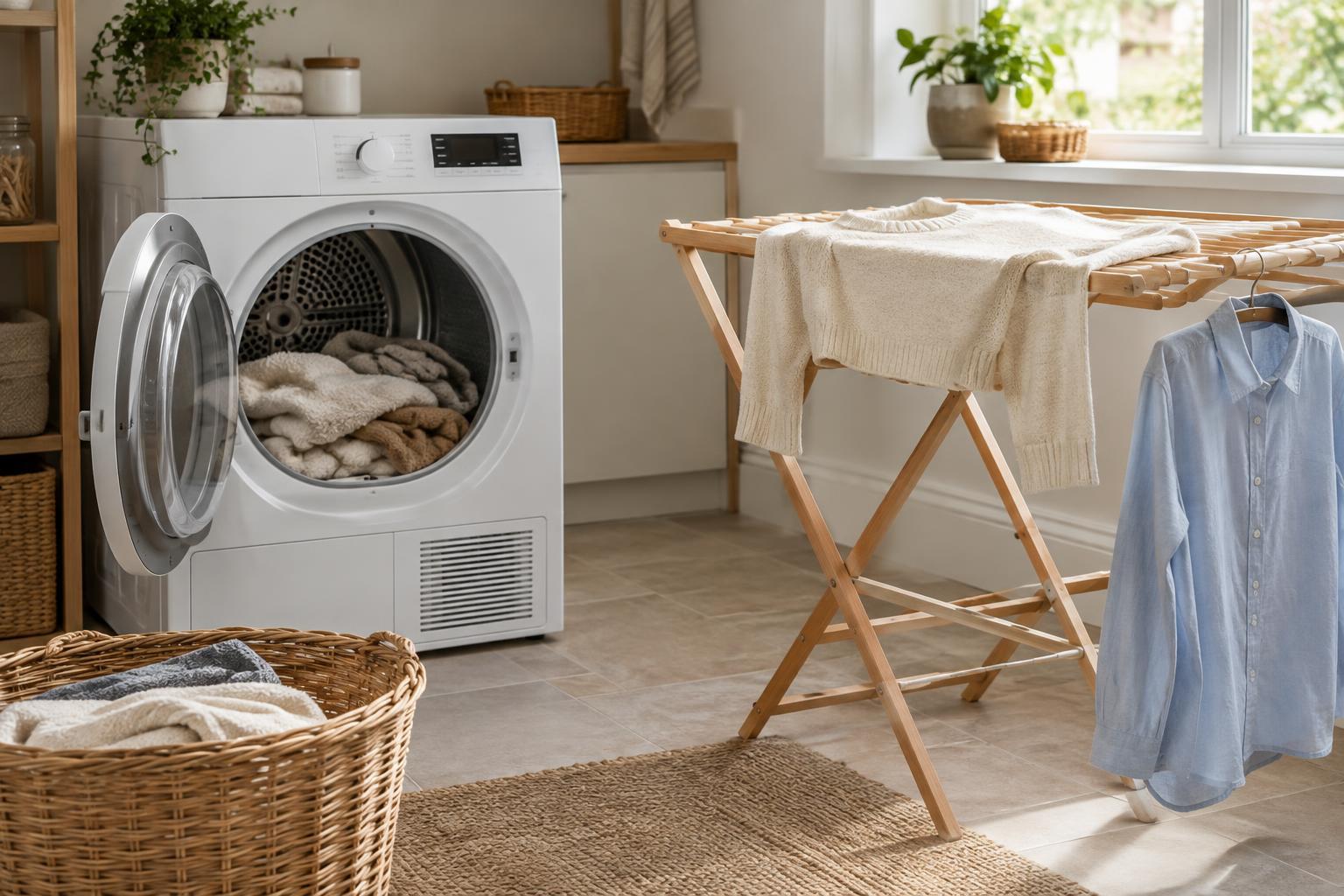
Place the rack or towel away from direct heat and strong sunlight. A radiator or hot dryer may dry a knit quickly, but concentrated heat can be hard on some fibers or finishes. Give the garment room rather than folding the sleeves across the body, where overlapping layers can stay damp longer. If you are drying it on a towel, replace the towel when it becomes wet.
Check the garment as it dries. You can gently turn it over once it is stable enough to handle, supporting it as you move it. Smooth any new folds and check that the seams still line up. Thick knits, cuffs, and underarms may take longer to dry than the main body. Wait until the entire piece feels dry before folding or storing it; trapped moisture can leave an unpleasant smell.
Adjust your approach to the knit
Fine, delicate knits benefit from minimal handling. Cotton knits may feel especially heavy when wet, so support them carefully when transferring them to the drying surface. Wool and cashmere also call for a light touch: rubbing, hot water, and abrupt temperature changes may affect their texture. For blends and synthetic fibers, the care label remains the best starting point because fiber content alone does not tell you how a particular garment was made or finished.
Before the next wash, notice how the garment fits and where its seams and hem naturally sit. That quick mental reference makes reshaping easier later. A simple routine—remove excess water, lay the knit flat, guide it into its usual outline, and leave it to dry completely—helps everyday sweaters stay ready to wear.